

The Standard Model for Business
A structured framework for how organisations are built, scaled, governed and assured.
It shows how strategy, operations, governance and assurance fit together: so leaders can manage complexity with clarity.
Why this model exists
Modern organisations are complex systems, yet most professionals are trained within functions, not across the enterprise.
Deep expertise is developed in domains, not across the whole system
Organisations are managed in parts, rather than understood as a whole
This creates structural blind spots:
Decisions do not always align across functions
Strategy and execution can diverge
Complexity grows faster than coordination
Leadership requires a system level perspective.
The most effective executives understand how the organisation fits together
They recognise how it must evolve as it scales
This perspective is rarely taught, yet essential at senior levels.
The Standard Model for Business provides that perspective.
It defines the core architecture of the enterprise
It shows how functions connect, scale and govern the organisation
Across two decades inside global organisations, the same pattern appeared:
Talented professionals operating within businesses they were never taught to fully understand.
This model exists to address that gap.
Who is it for?
The Standard Model for Business is designed for people who want to understand how organisations really work. It is especially valuable for those moving beyond functional expertise and beginning to think at an enterprise level.
Entrepreneurs
Founders and builders who want to design companies with clear structure, scalable systems and strong governance from the beginning.
Professionals
Ambitious managers and specialists who want to understand how the entire organisation operates, not just their own function.
Executives
Senior leaders responsible for strategy, performance and organisational alignment across multiple functions.
Investors and advisors
Board members, investors and advisors who need a structured way to assess how companies are built, governed and scaled.
The model provides a common language for understanding the enterprise as a system, something rarely taught, yet essential for leadership.
The Model
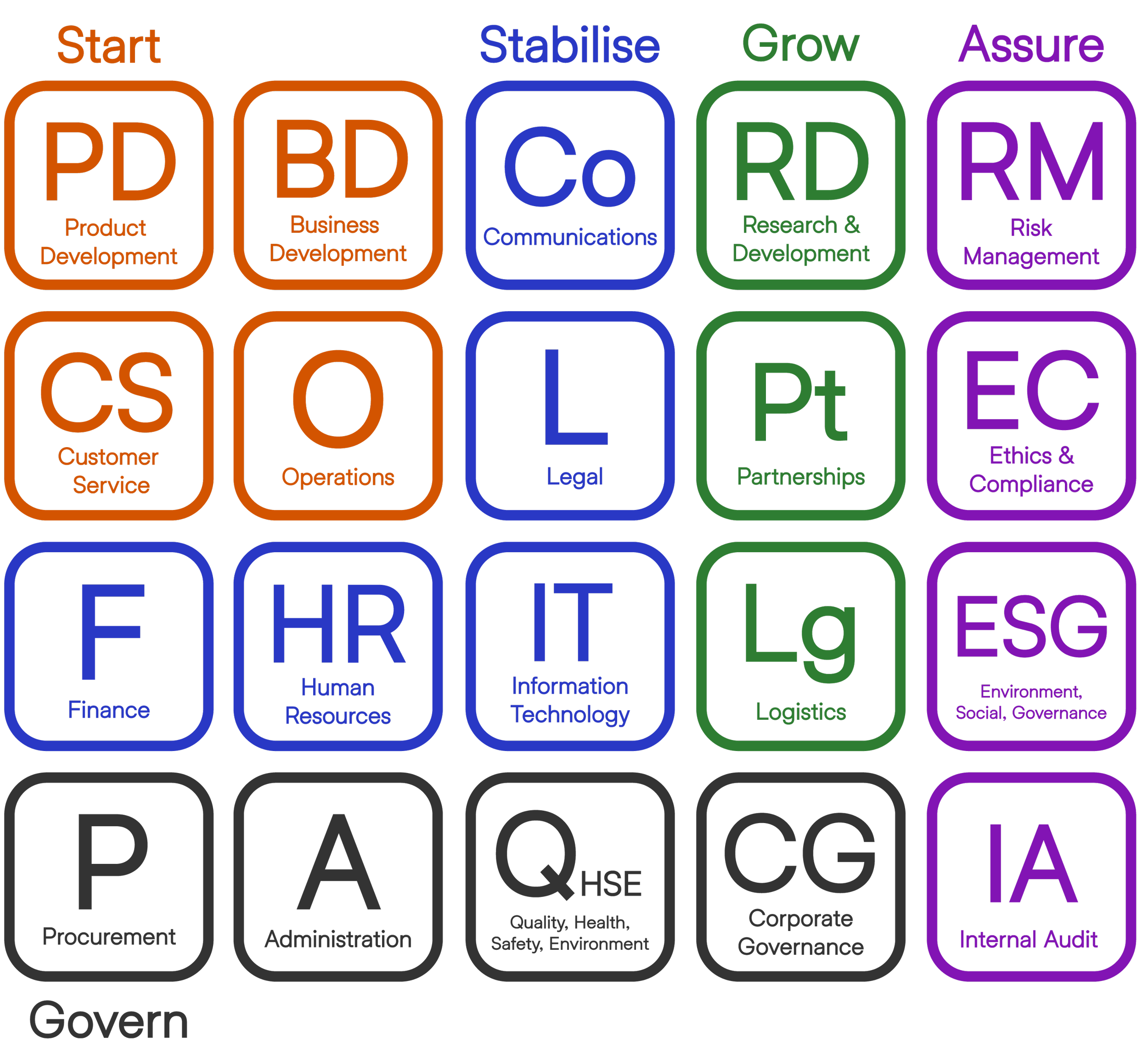
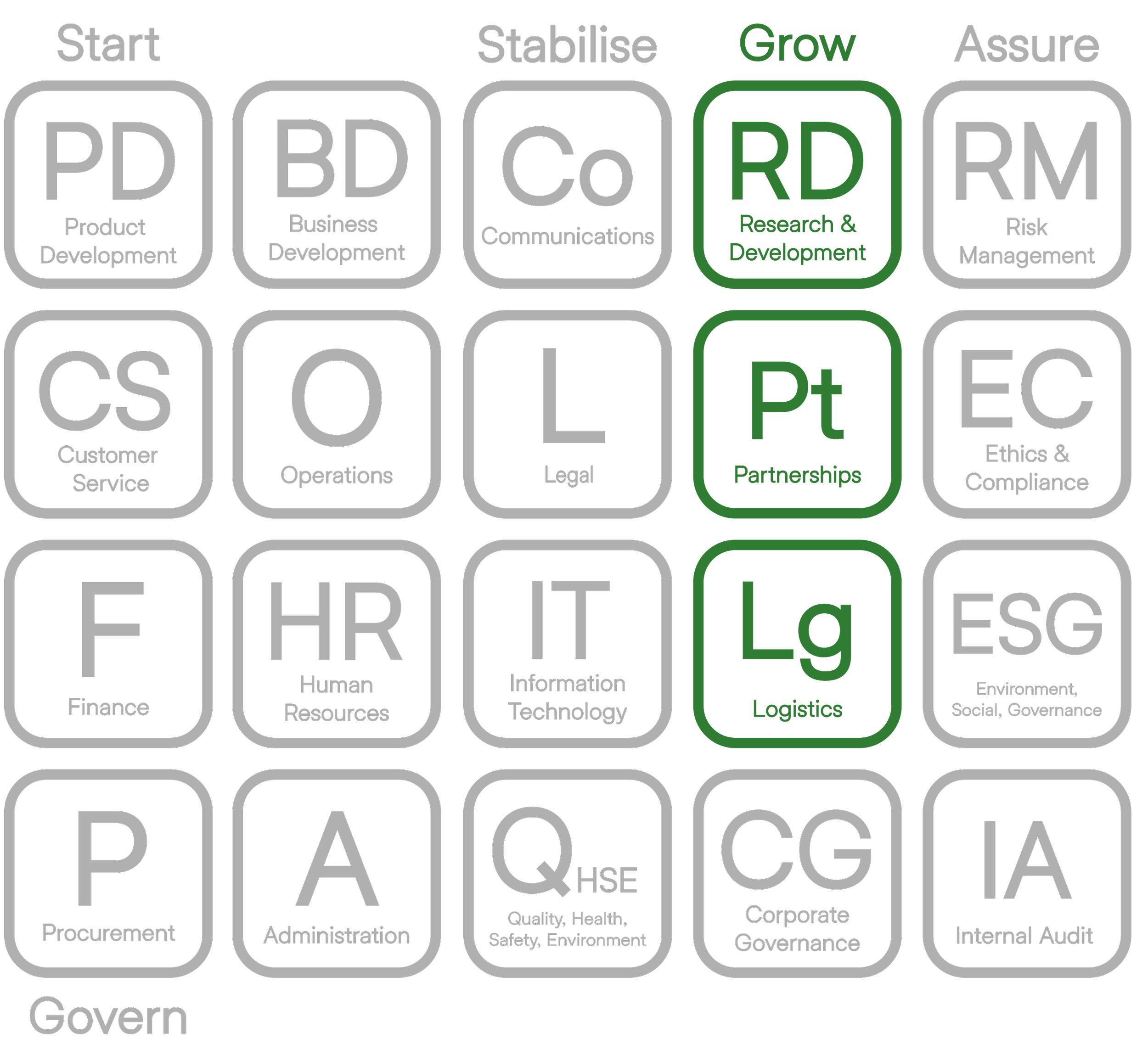
Each of the five stages represents a phase in the life of a company. Each stage is supported by a set of functions, and they create a full map of modern business:
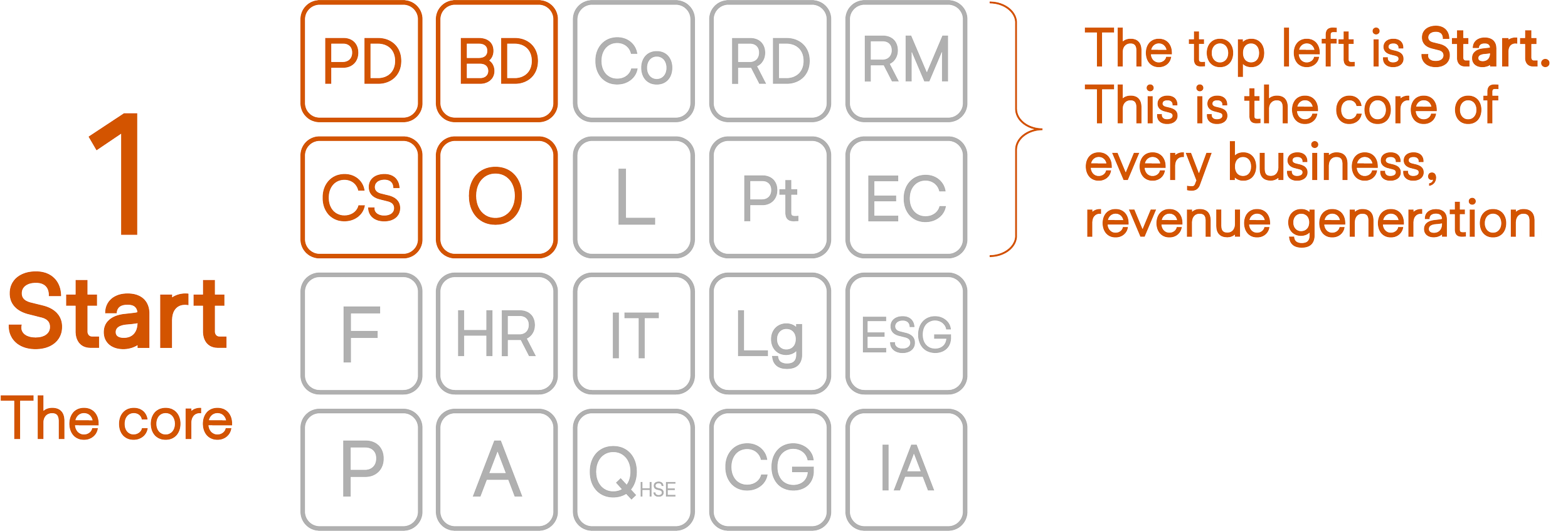
Start. Turning an idea into reality. Creating a product or service, finding customers and proving you have something worth buying.
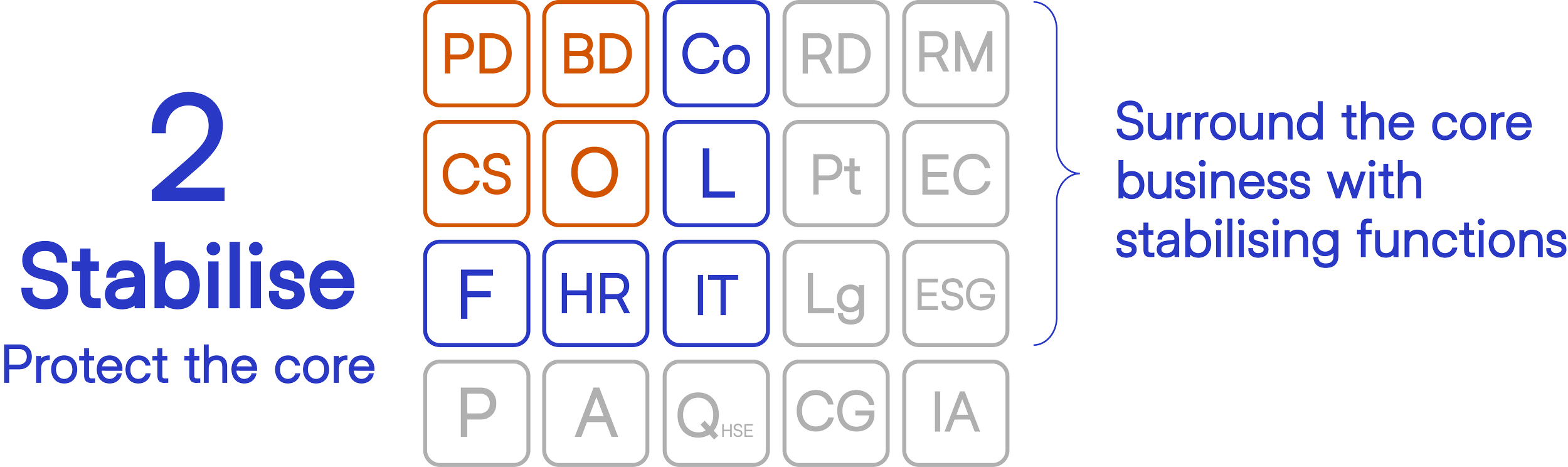
Stabilise. Bringing order to chaos. Building systems and functions that create the foundation for sustainable growth.
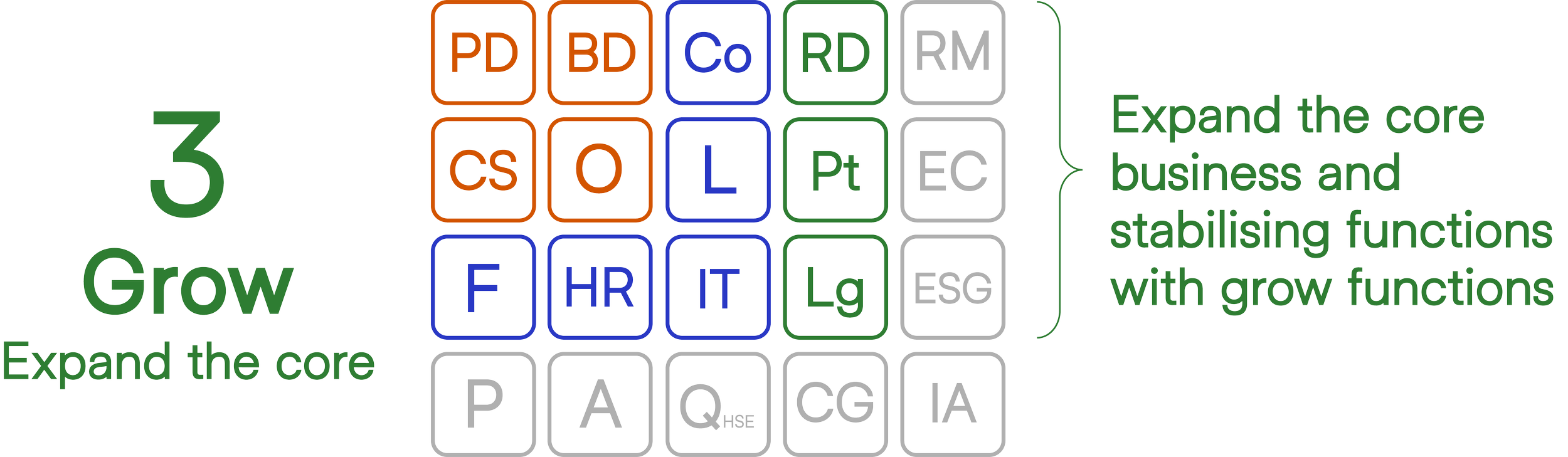
Grow. Scaling up. Expanding products, services and markets with ambition and discipline.
Govern. Protecting performance. Ensuring discipline, accountability and control as the stakes rise.
Assure. Securing trust. Providing confidence to stakeholders that the company is not only effective, but responsible.
How to read the model
The model is structured across five stages of organisational maturity:
Start: building the foundation
Stabilise: creating operational consistency
Grow: scaling capability and performance
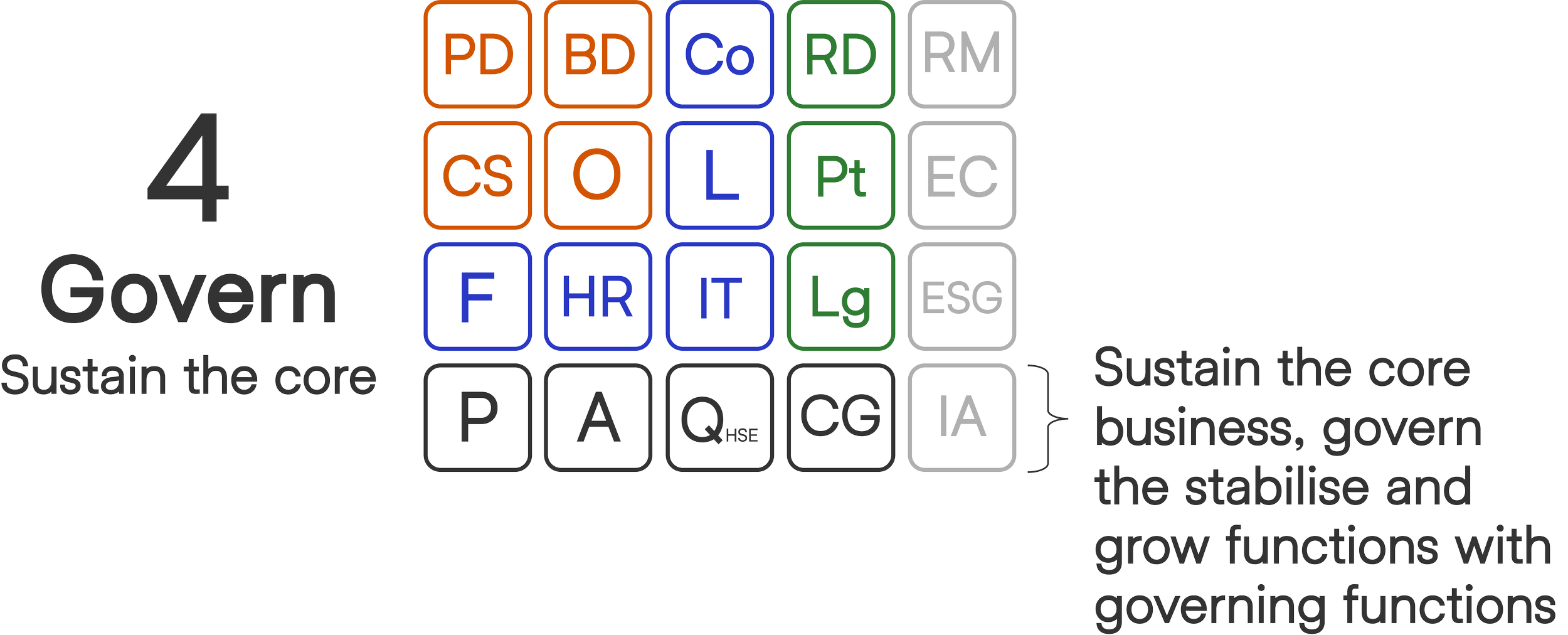
Govern: strengthening control and oversight
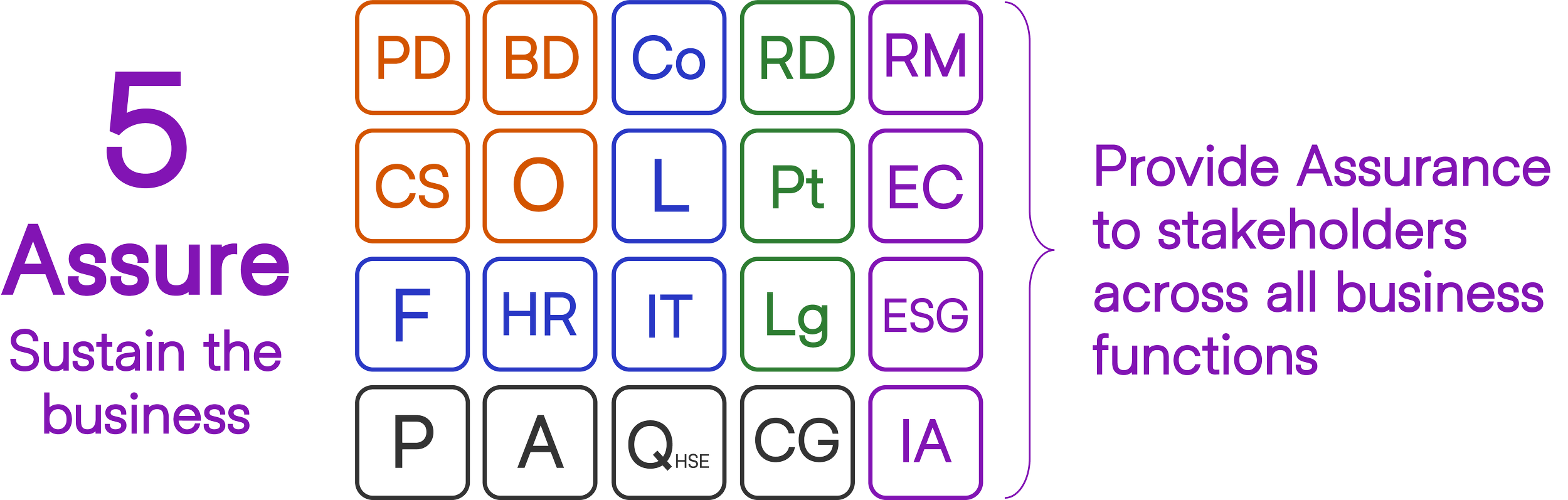
Assure: providing independent confidence
Each stage introduces new capabilities, while increasing the complexity of the system.
Start

The Start stage turns an idea into a working business.
Product development: creativity within constraints
Business development: aligning ideas with market demand
Customer service: ensuring customers succeed
Operations: turning vision into reality at scale
Product Development
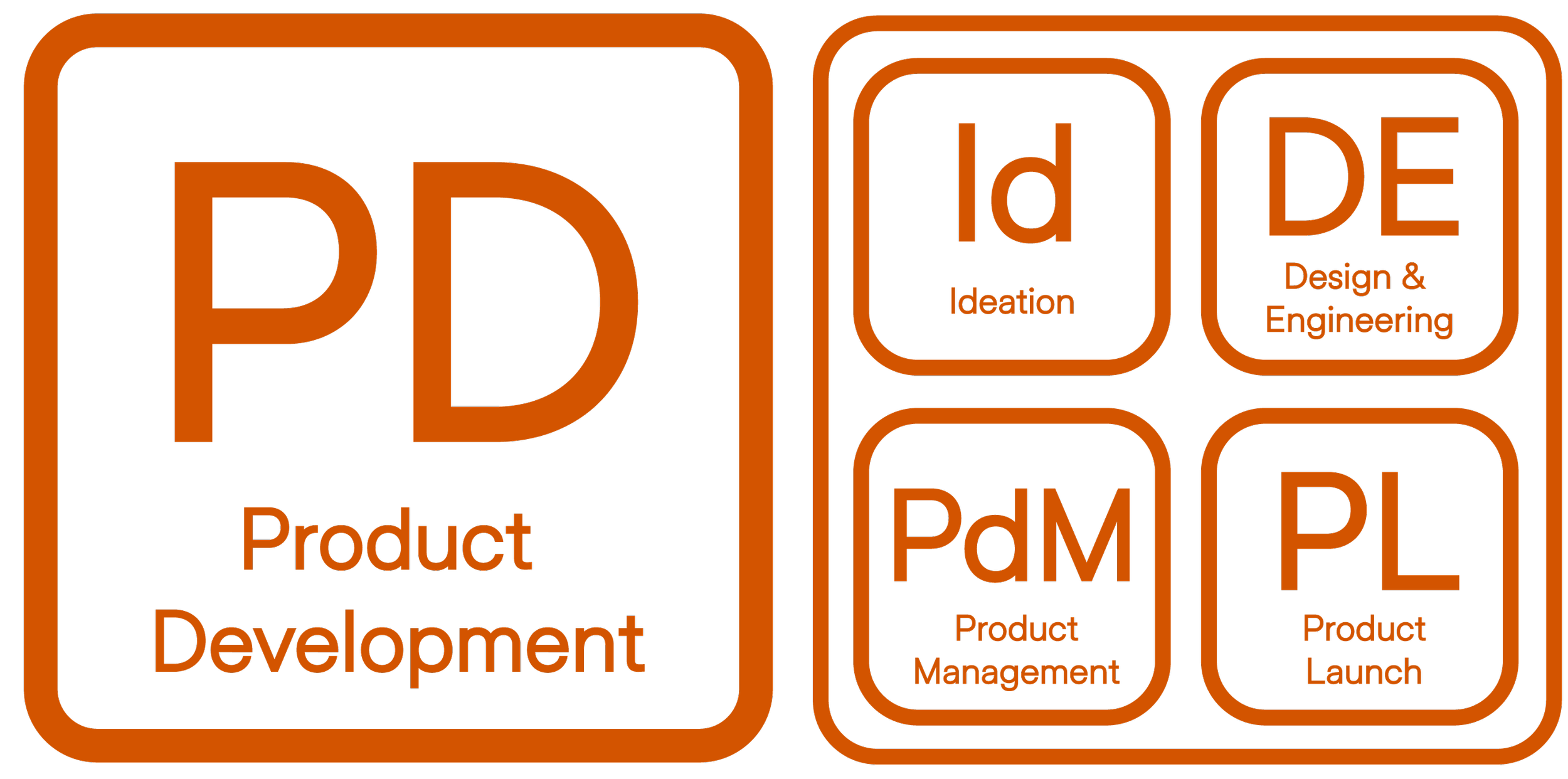
A business exists to create something customers will pay for.
Product development defines, builds and brings that offering to market.
Ideation: identifying the problem and shaping the concept
Design & engineering: developing the product or service
Product management: aligning features, priorities and delivery
Product launch: introducing the offering to the market
Business Development

Business development connects the offering to the market and drives growth.
Sales: converting demand into revenue
Marketing: generating awareness and interest
Brand & positioning: shaping how the business is perceived
Vision, mission & strategy: defining direction and guiding execution
Customer Service
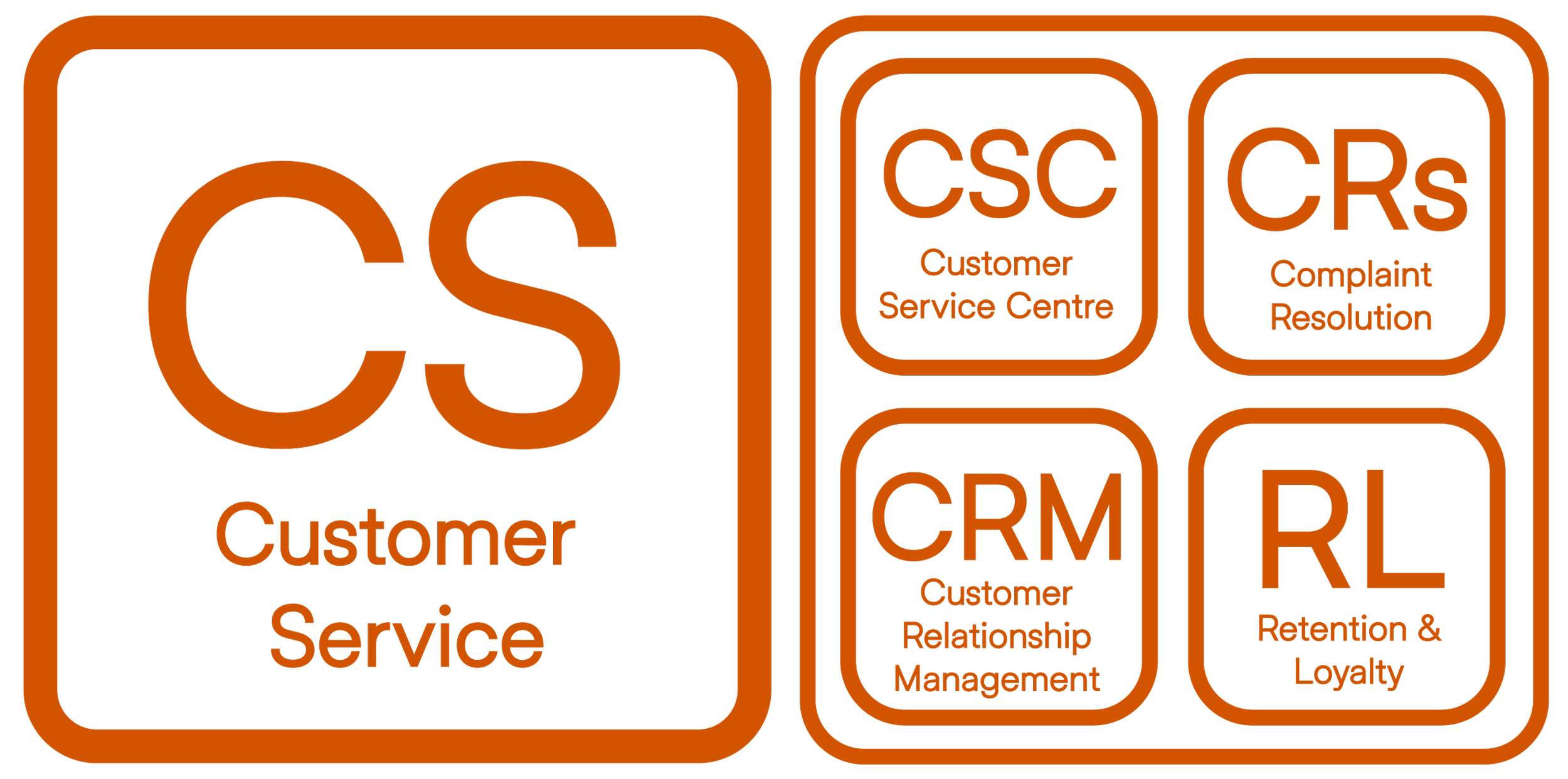
Customer service sustains the business by turning customers into long-term relationships.
Customer service centre: managing day-to-day customer interactions
Complaint resolution: addressing issues and restoring confidence
Customer relationship management: maintaining and strengthening relationships
Retention & loyalty: encouraging repeat engagement and long-term value
Operations
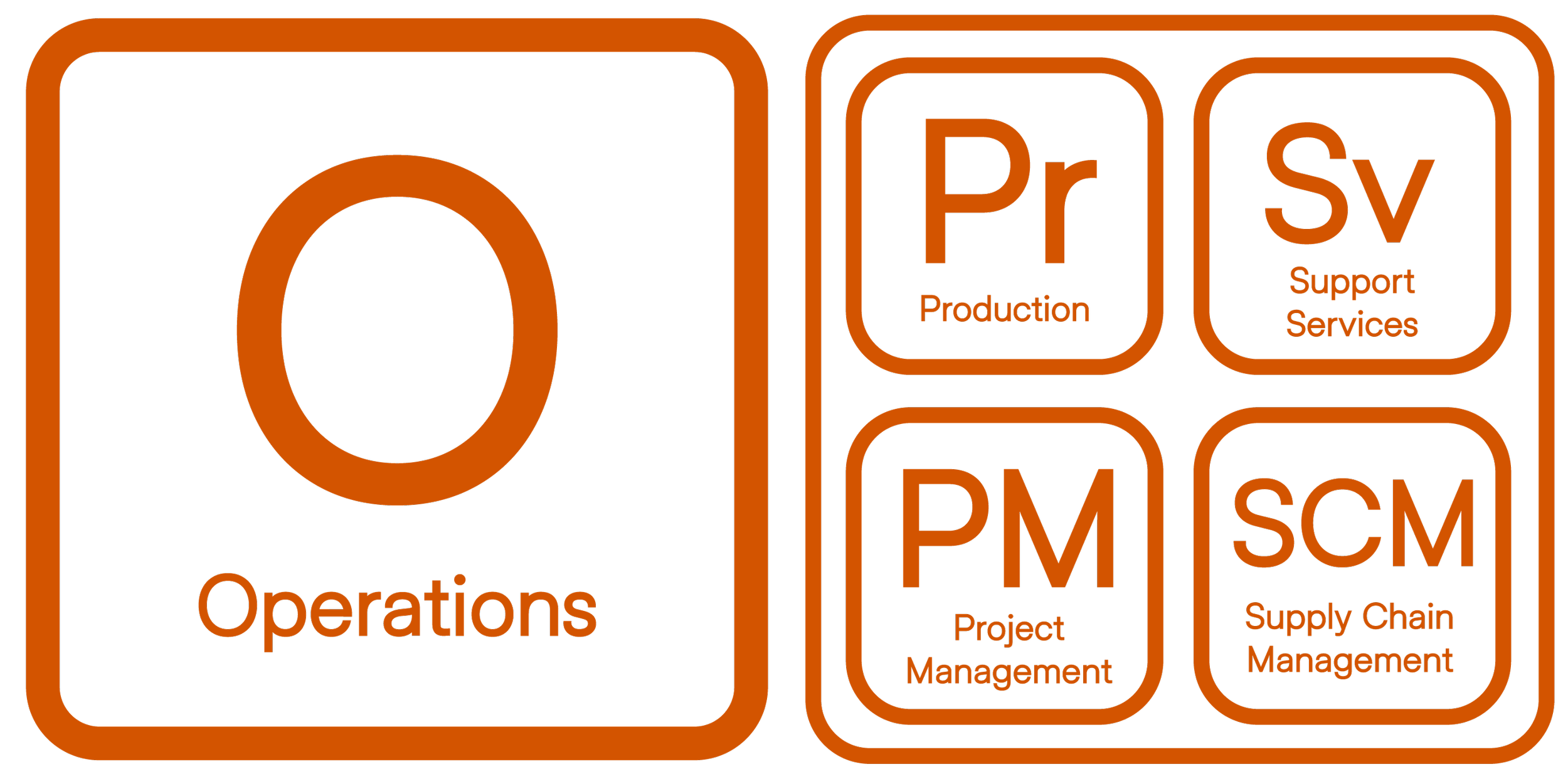
Operations deliver what the business promises.
Production: creating the product or delivering the service
Support services: enabling day-to-day operations to function effectively
Project management: coordinating initiatives and change
Supply chain management: managing inputs, logistics and delivery
Stabilise
The Stabilise stage establishes structure, consistency and control.
Finance: managing capital, performance and financial discipline
Human resources: building capability, structure and culture
Information technology: enabling systems, data and connectivity
Legal: ensuring compliance and protecting the organisation
Communications: aligning messaging internally and externally

Finance
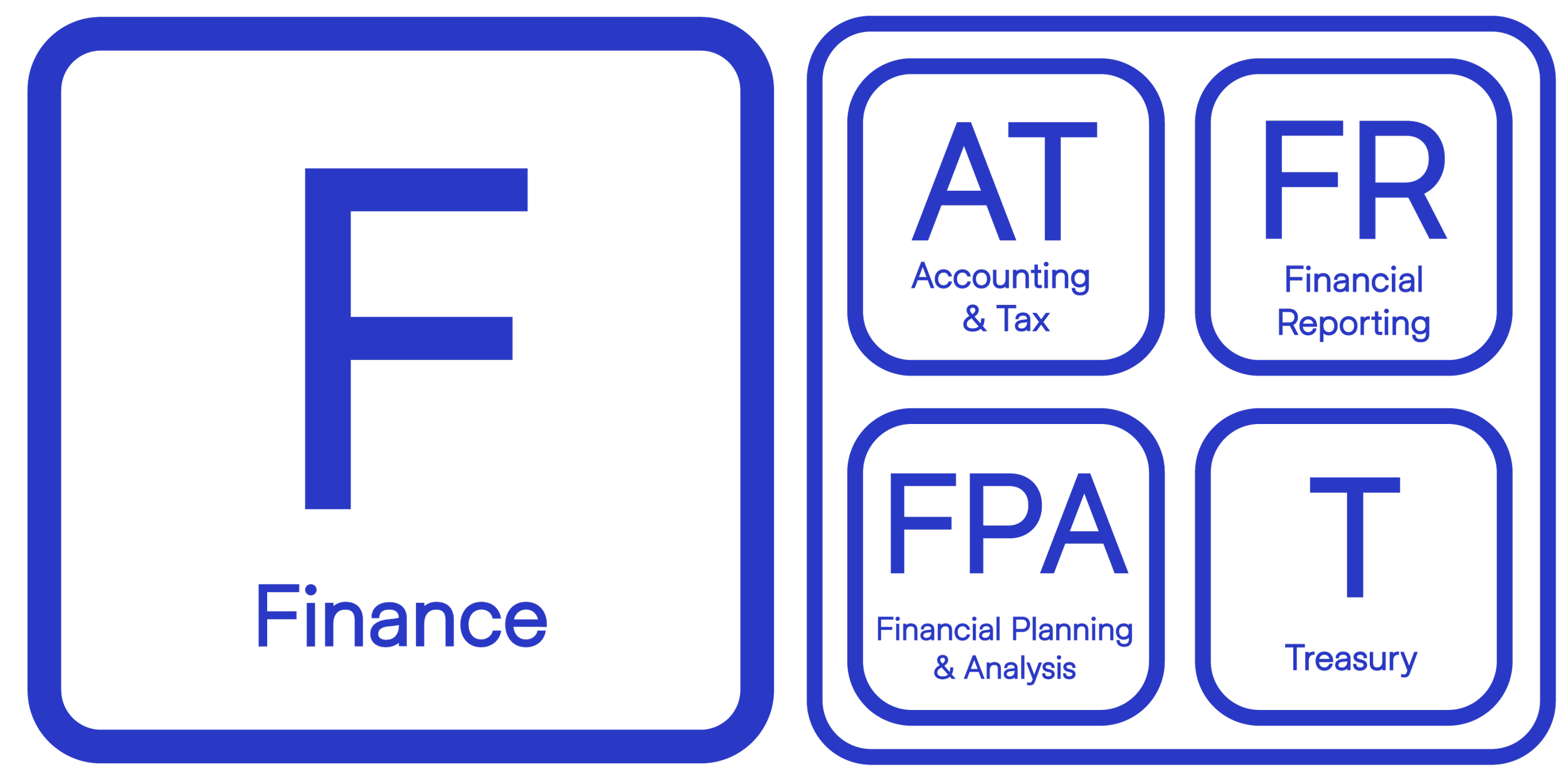
Finance provides structure, discipline and visibility across the business.
Accounting & tax: maintaining accurate records and regulatory compliance
Financial reporting: providing a clear view of performance and position
Financial planning & analysis: supporting decision-making through forecasting and insight
Treasury: managing cash, funding and financial risk
Human Resources (HR)
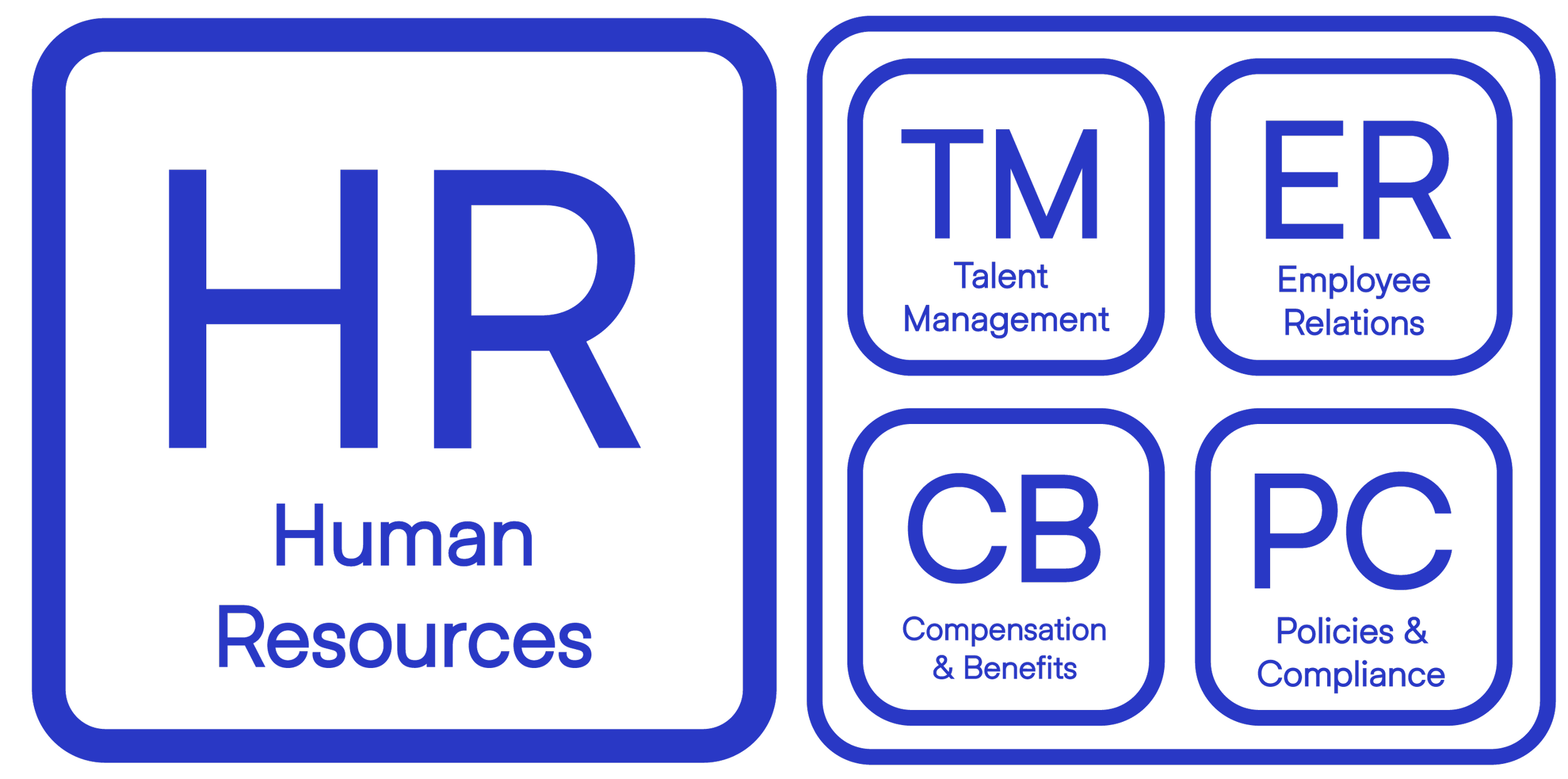
Human resources builds capability, structure and culture across the organisation.
Talent management: attracting, developing and retaining people
Employee relations: managing relationships and workplace dynamics
Compensation & benefits: rewarding performance and aligning incentives
Policies & compliance: establishing standards and ensuring legal compliance
Information Technology (IT)
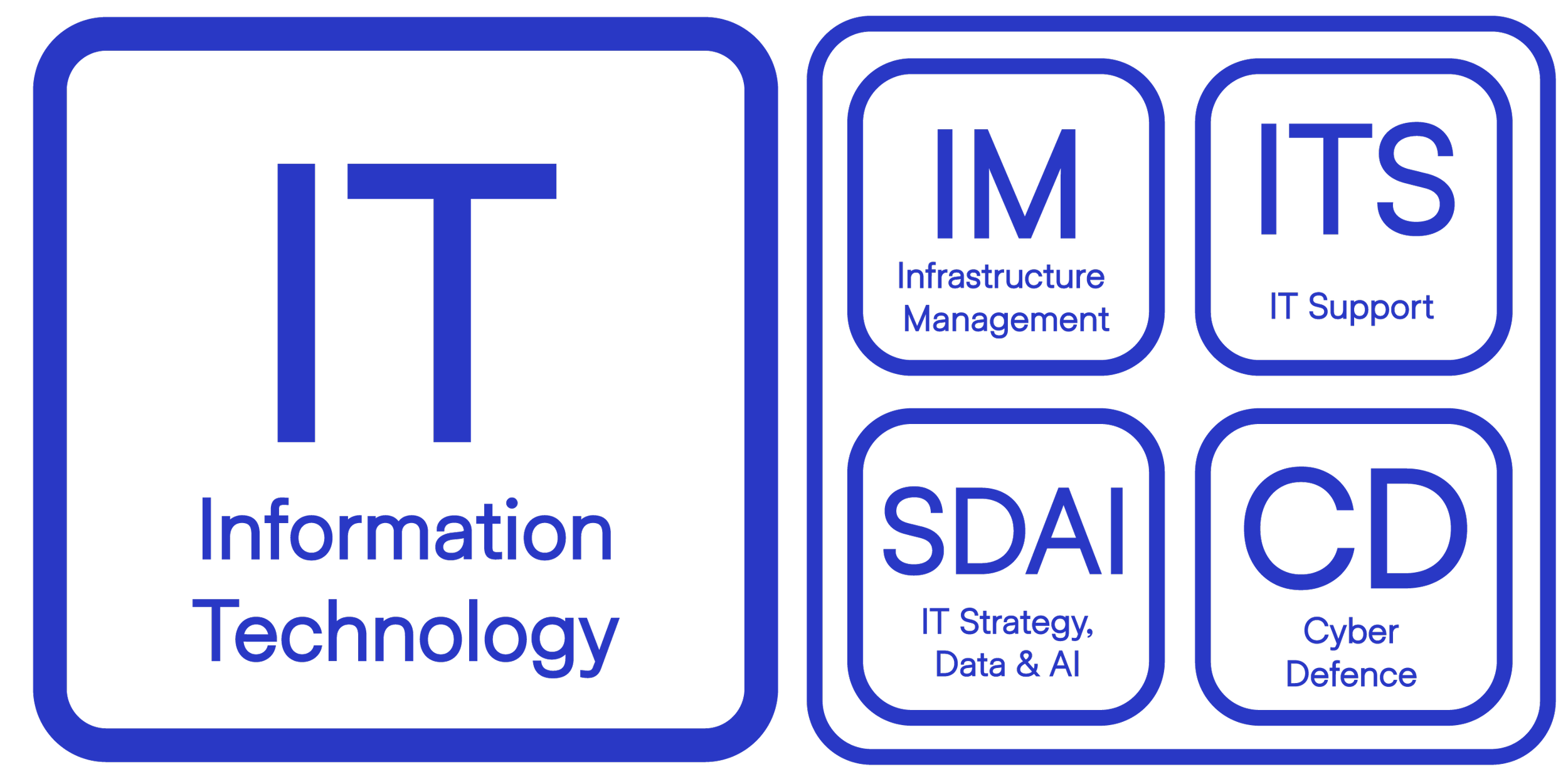
Information technology enables systems, data and security across the organisation.
Infrastructure management: maintaining core systems and platforms
IT support: ensuring reliability and day-to-day performance
IT strategy, data & AI: using technology and data to drive efficiency and insight
Cyber defence: protecting the organisation from digital threats
Legal
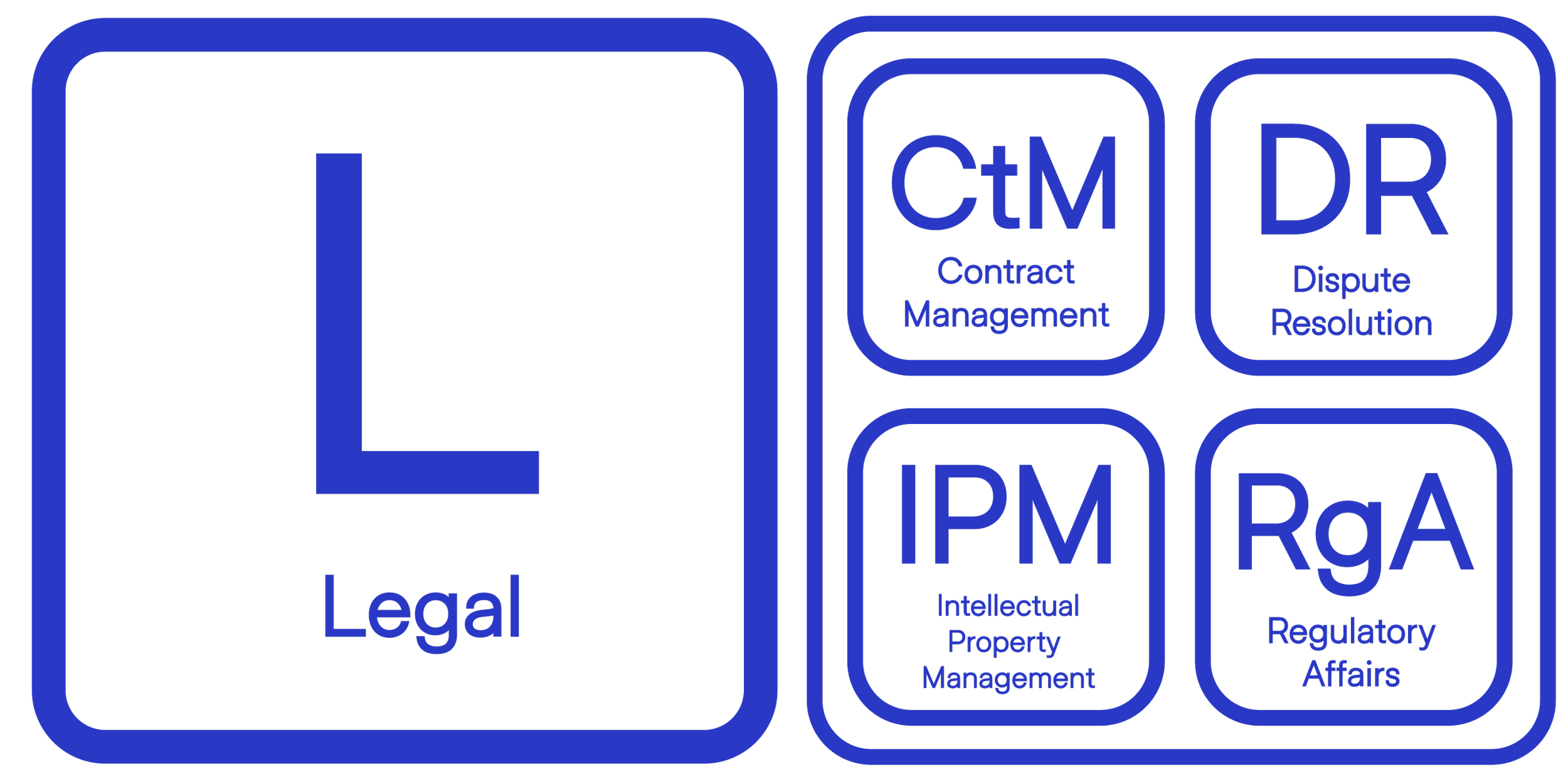
Legal protects the organisation and enables it to operate with confidence.
Contract management: structuring and governing agreements
Dispute resolution: managing conflicts and legal claims
Intellectual property management: protecting proprietary assets
Regulatory affairs: ensuring compliance across jurisdictions
Communications
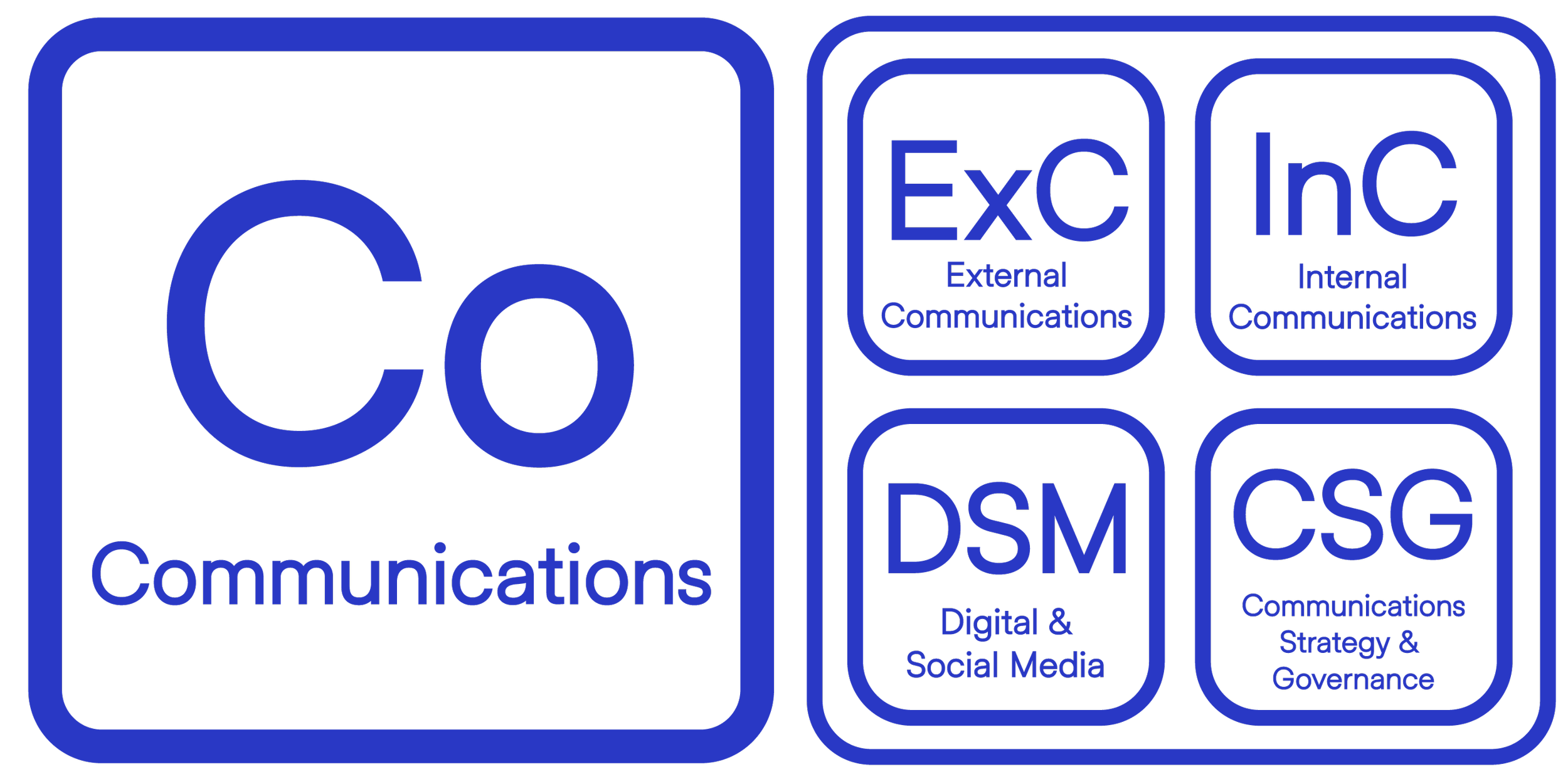
Communications shapes how the organisation is understood internally and externally.
External communications: engaging customers, investors and the wider market
Internal communications: aligning employees around a shared direction
Digital & social media: managing online presence and engagement
Communication strategy & governance: ensuring consistency, control and messaging discipline
Grow
The Grow stage scales the organisation’s capability, reach and performance.
Research & development: expanding and improving products and services
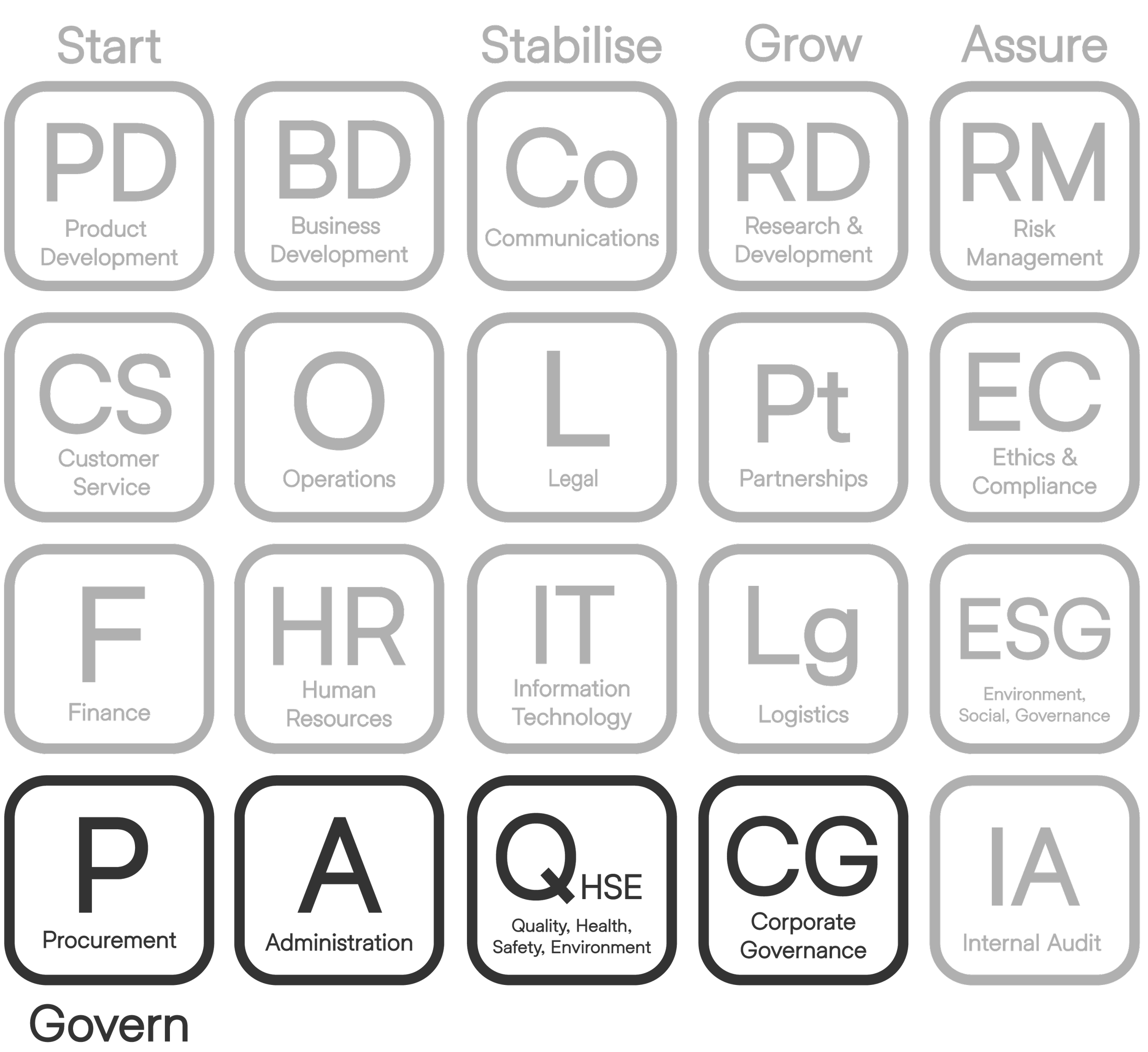
Partnerships: extending capability and access through external relationships
Logistics: enabling efficient distribution and delivery at scale
Research & Development (R&D)
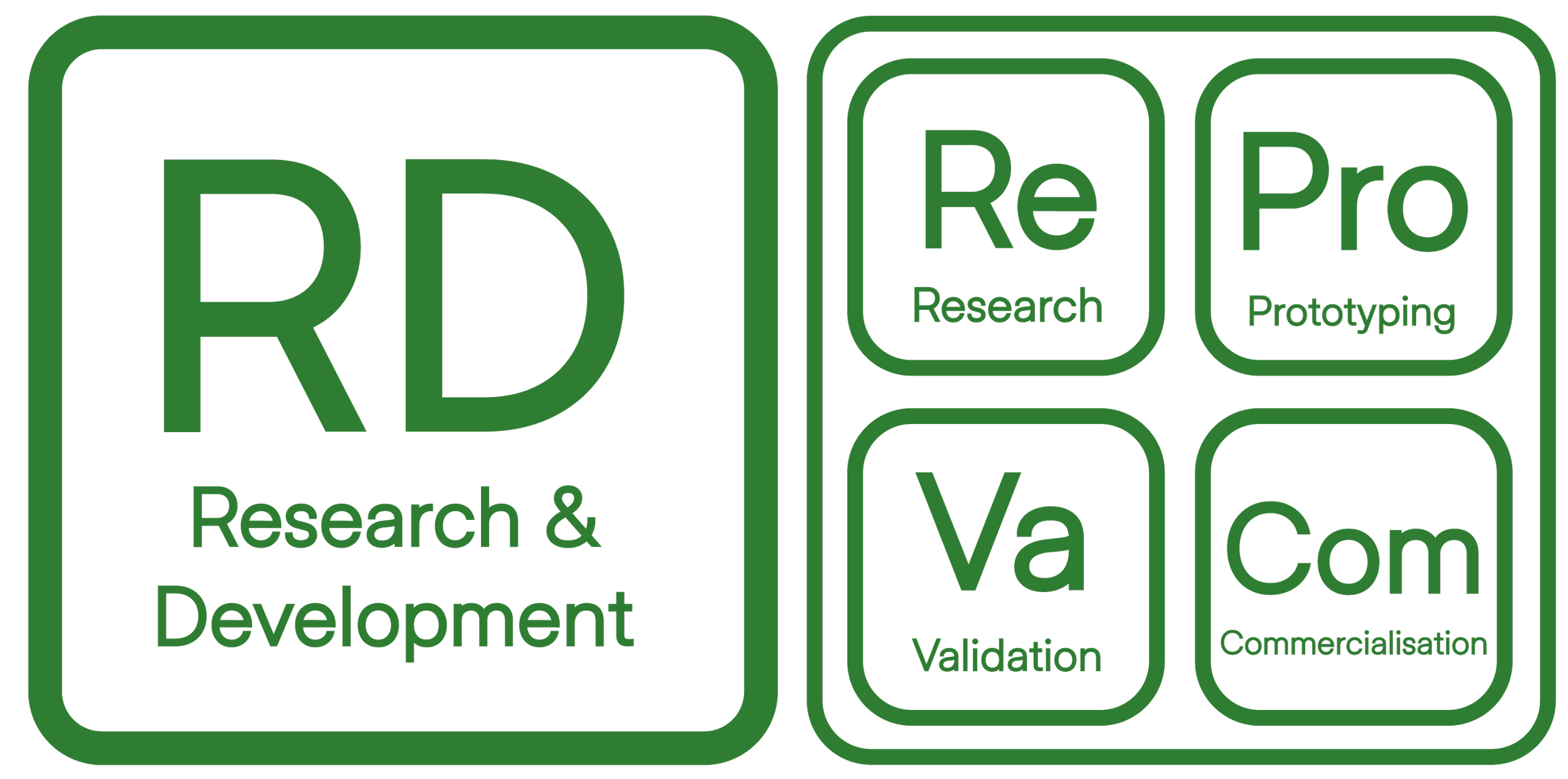
Research & development expands and evolves the organisation’s offering.
Research: exploring opportunities and emerging needs
Prototyping: developing and testing new concepts
Validation: assessing viability and market fit
Commercialisation: bringing innovations to market
Partnerships
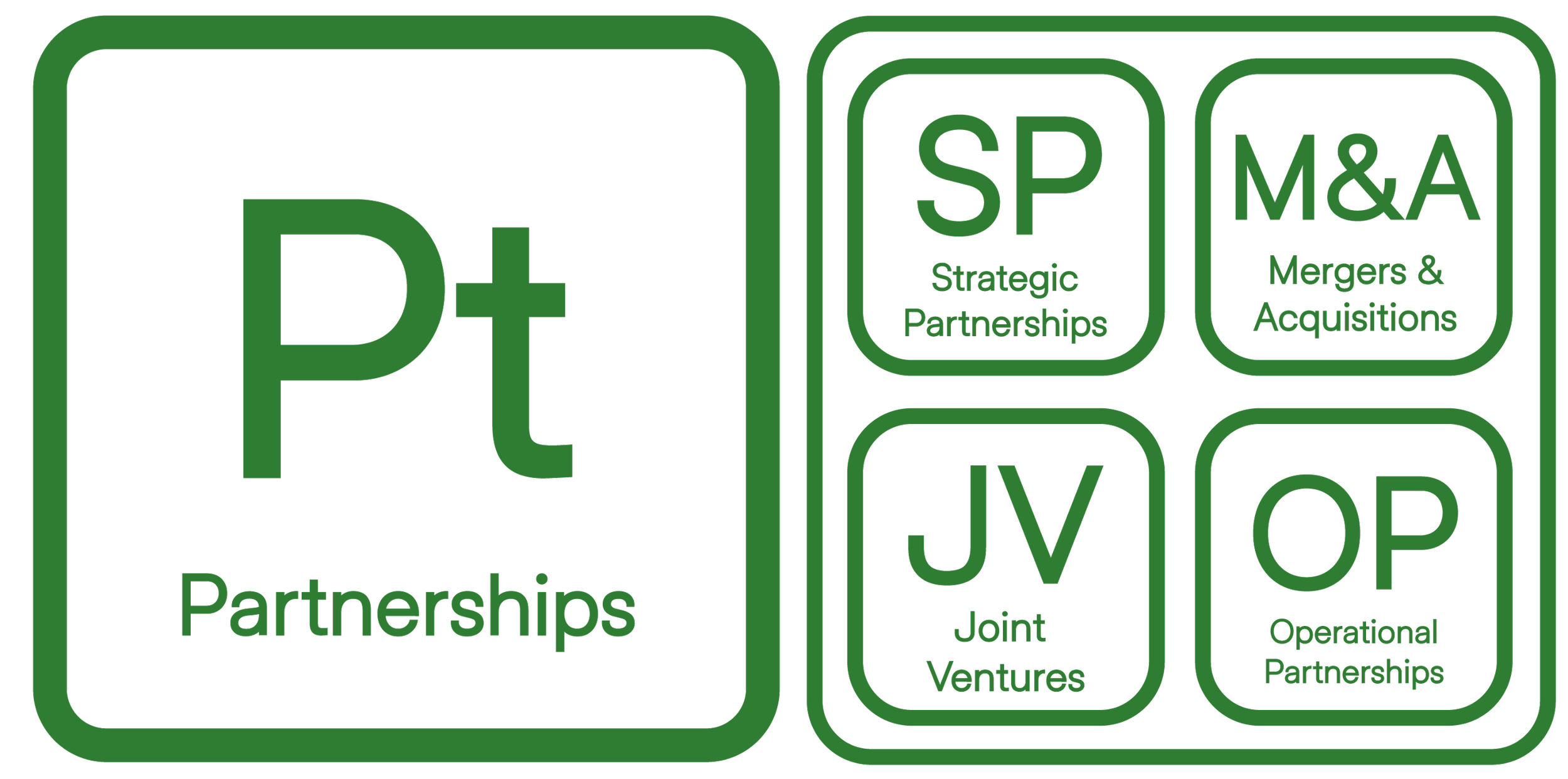
Partnerships extend capability, access and scale beyond the organisation.
Strategic partnerships: aligning with external organisations for mutual advantage
Mergers & acquisitions: expanding capability through integration
Joint ventures: collaborating to pursue shared opportunities
Operational partnerships: supporting delivery through suppliers and distributors
Logistics
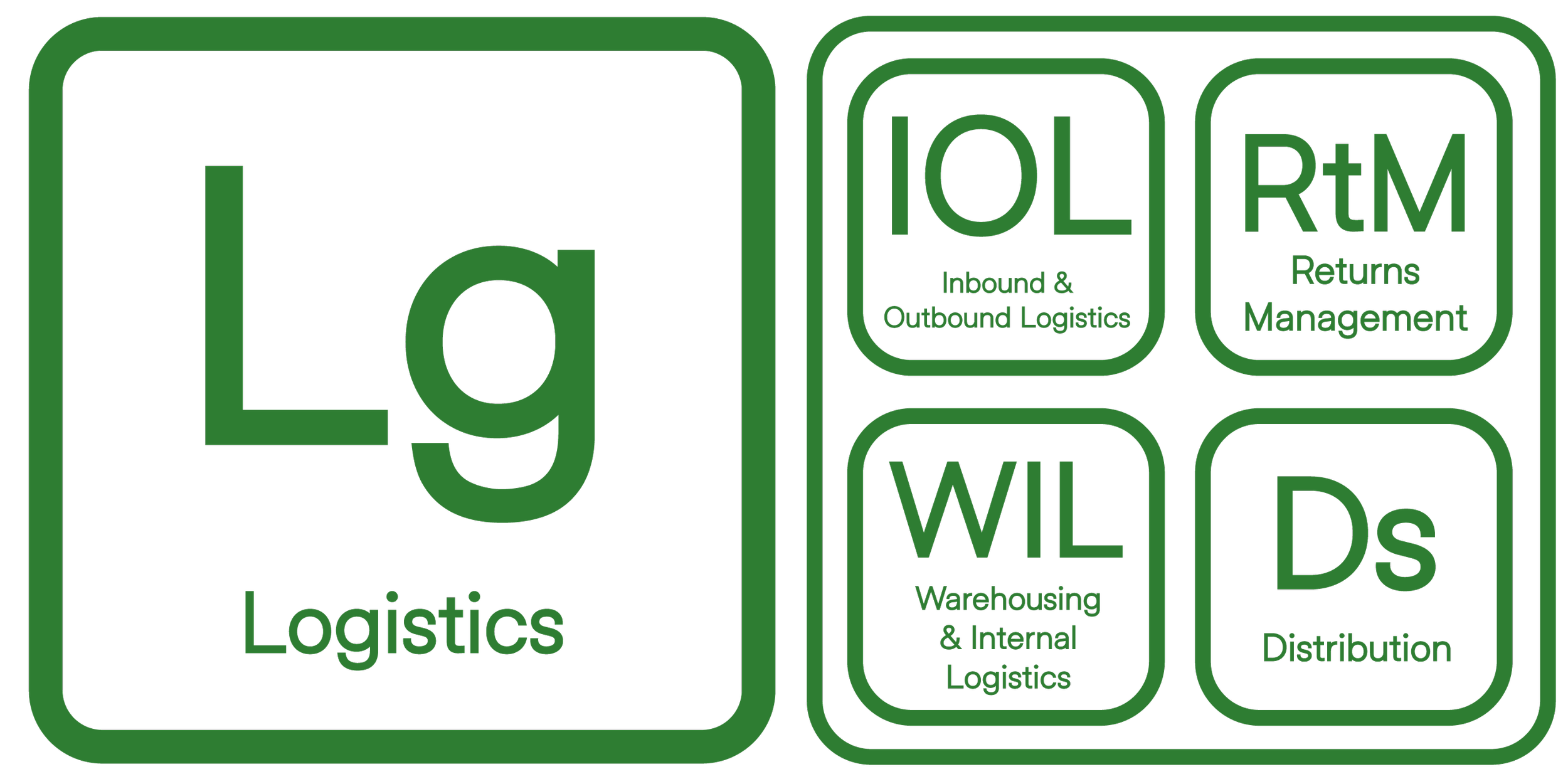
Logistics enables the efficient flow of products, services and resources at scale.
Inbound & outbound logistics: managing the movement of inputs and finished goods
Returns management: handling product returns and reverse flows
Warehousing & internal logistics: storing and managing inventory and internal movement
Distribution: delivering products and services to customers
Govern
The Govern stage establishes oversight, discipline and control across the organisation.
Procurement: managing external spend and supplier relationships
Administration: supporting organisational coordination and control
Quality, Health, Safety and Environment (QHSE): ensuring standards, safety and operational integrity
Corporate governance: providing structure, accountability and oversight at leadership level
Procurement
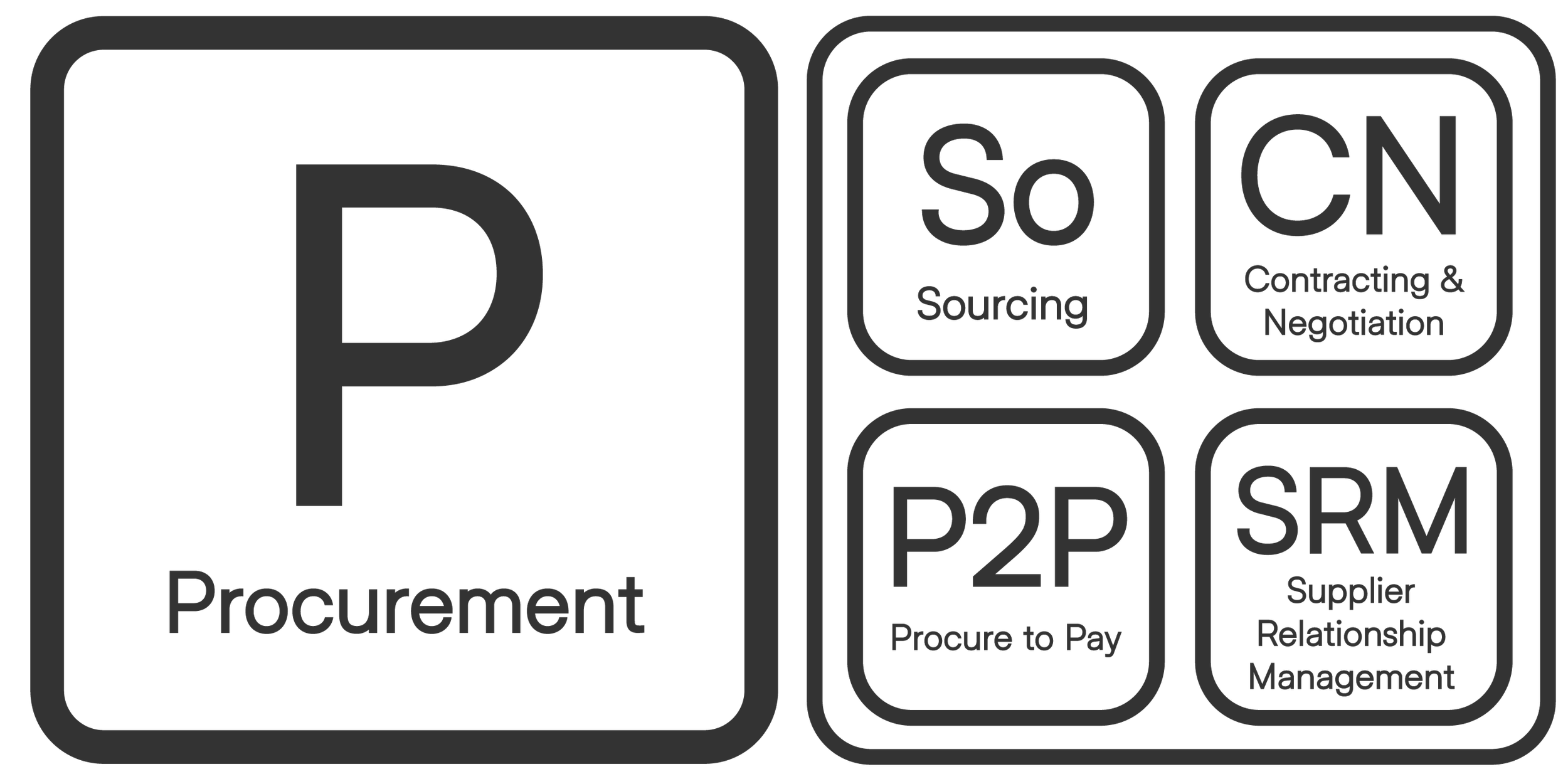
Procurement secures the resources required to operate efficiently and at scale.
Sourcing: identifying and selecting suppliers
Contracting & negotiation: agreeing terms, pricing and conditions
Procure to pay: managing the end-to-end purchasing process
Supplier relationship management: maintaining performance and continuity
Quality, Health, Safety, Environment (QHSE)
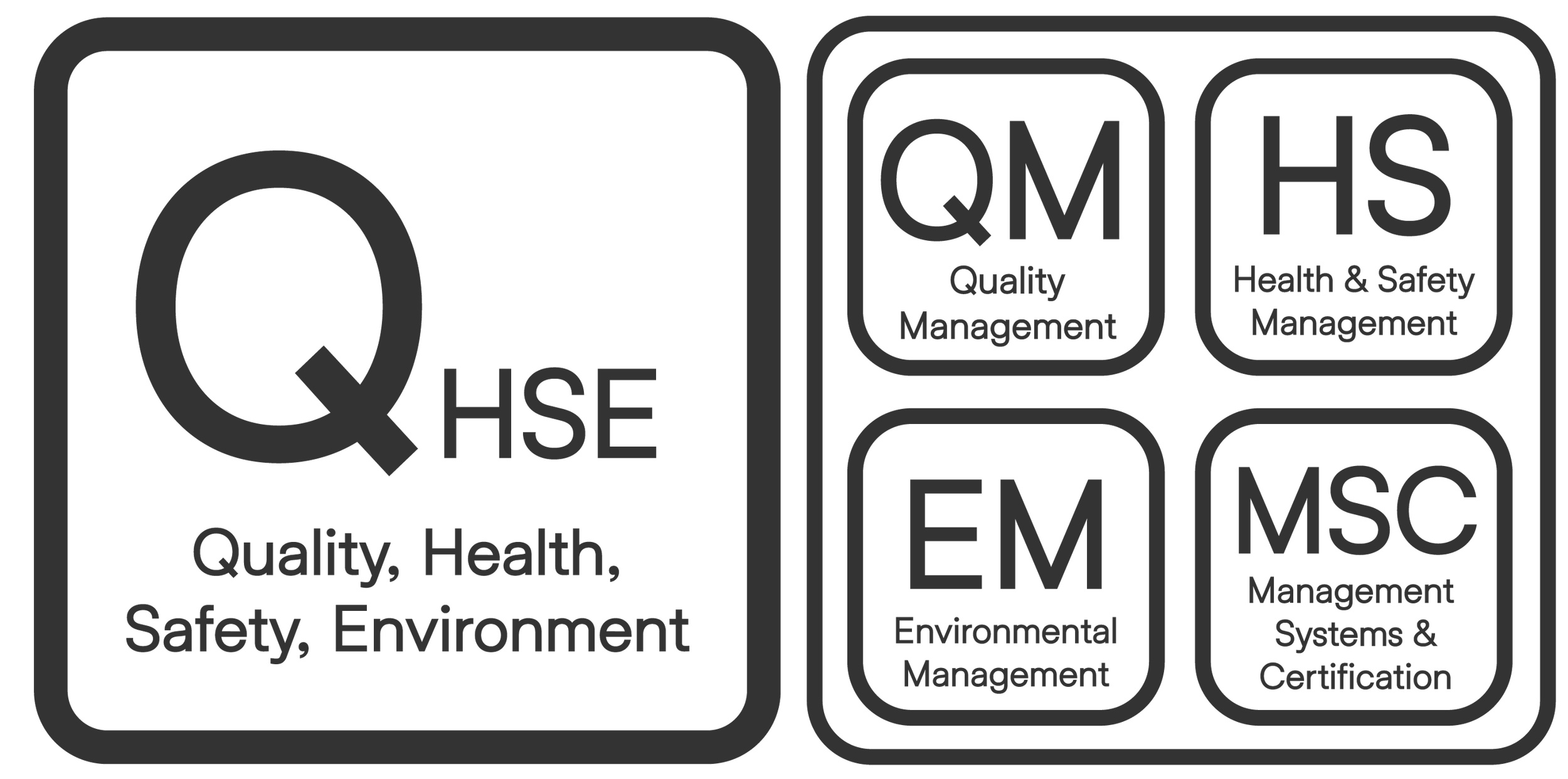
QHSE establishes standards, safeguards people and ensures regulatory compliance.
Quality management: maintaining standards across products and services
Health & Safety management: protecting people and workplace safety
Environmental management: managing environmental impact and responsibility
Management systems & certification: embedding standards and formal assurance
Administration
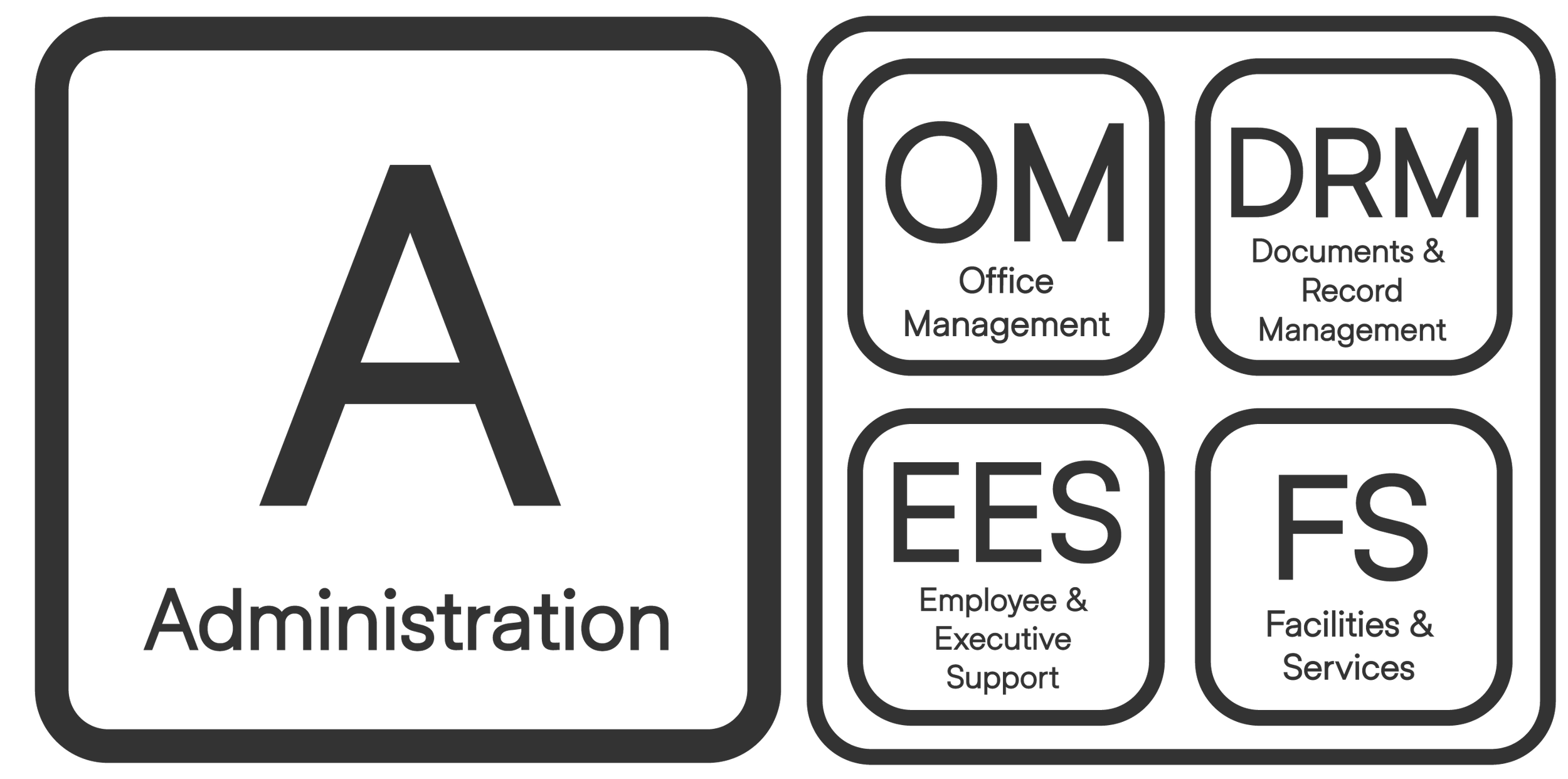
Administration enables coordination, consistency and day-to-day operational control.
Office management: organising and maintaining the working environment
Documents & records management: managing information, documentation and access
Employee & executive support: supporting individuals and leadership operations
Facilities & services: managing physical infrastructure and workplace services
Corporate Governance
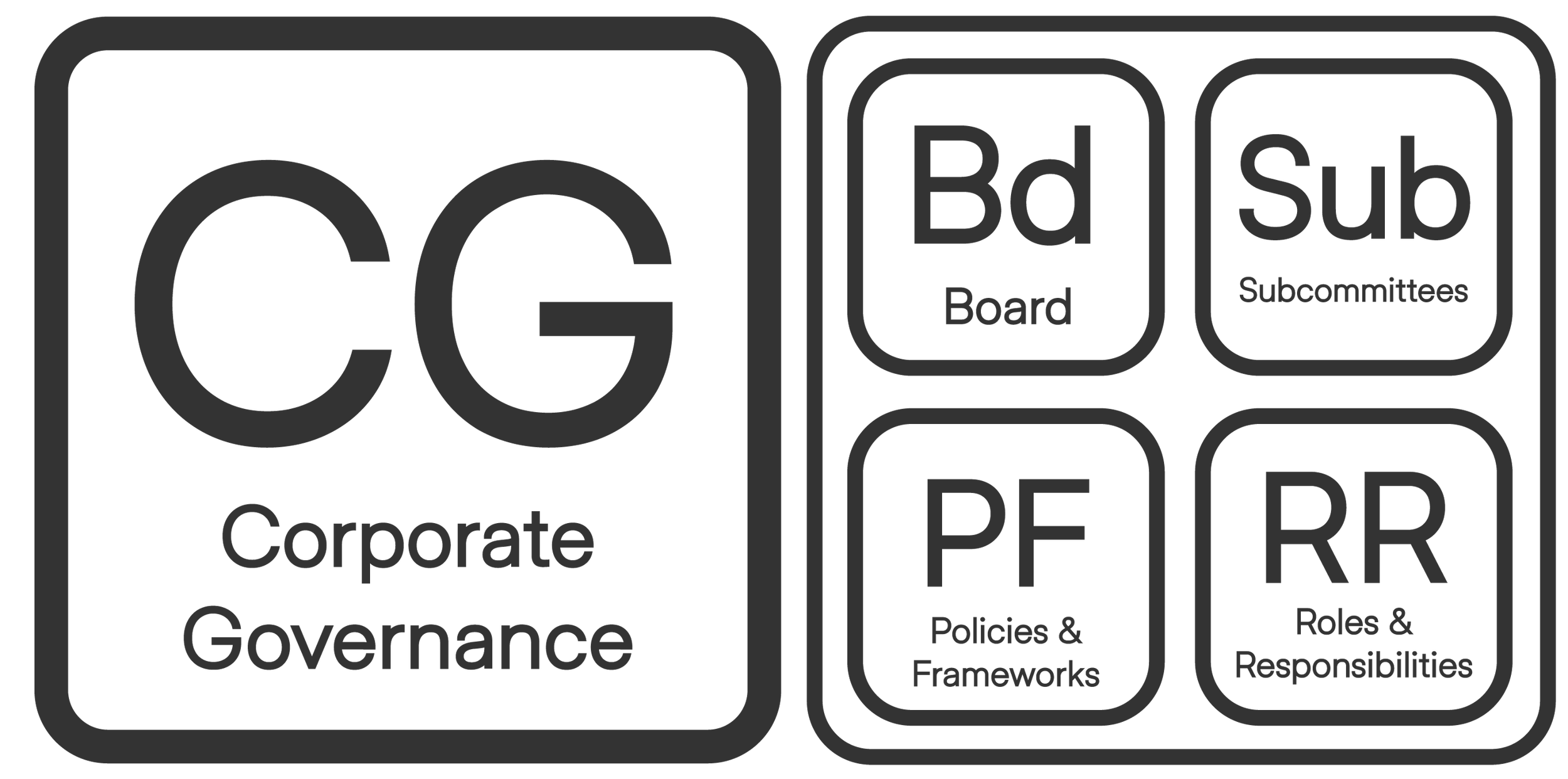
Corporate governance aligns leadership decisions with structure, accountability and oversight.
Board: providing direction, oversight and challenge
Subcommittees: focusing on key areas such as audit, risk and remuneration
Policies & frameworks: establishing rules, standards and governance structures
Roles & responsibilities: defining accountability across leadership and the organisation
Assure
The Assure stage provides independent confidence over how the organisation is managed.
Risk management: identifying, assessing and managing uncertainty
Ethics & compliance (E&C): ensuring conduct aligns with laws and standards
Environmental, Social and Governance (ESG): addressing broader stakeholder expectations
Internal audit: providing independent assurance over governance, risk and control

Risk Management
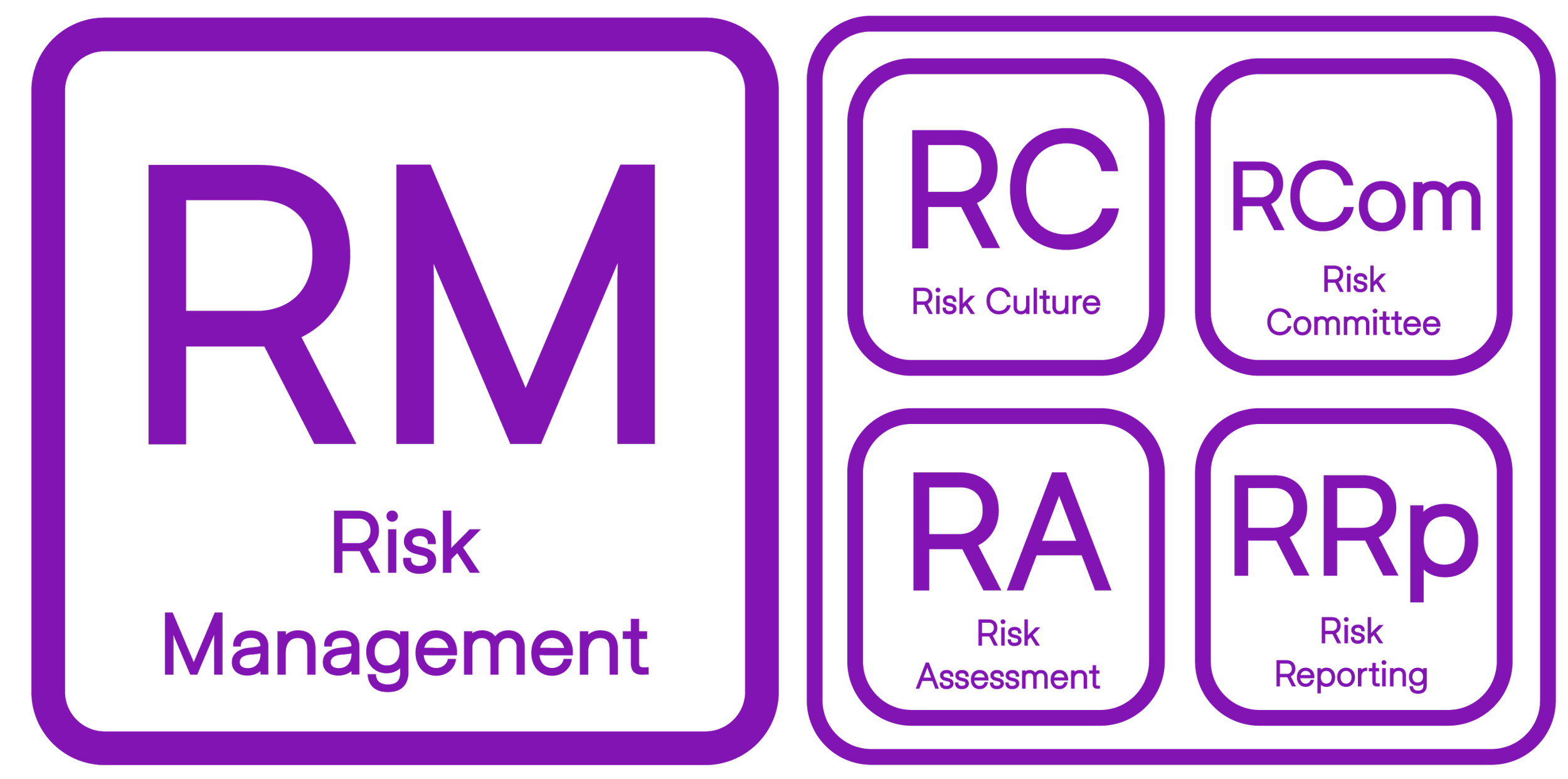
Risk management identifies, assesses and manages uncertainty across the organisation.
Risk culture: embedding awareness and accountability in decision-making
Risk committee: providing oversight and challenge at leadership level
Risk assessment: identifying, analysing and prioritising risks
Risk reporting: communicating risk exposure and mitigation
Ethics & Compliance
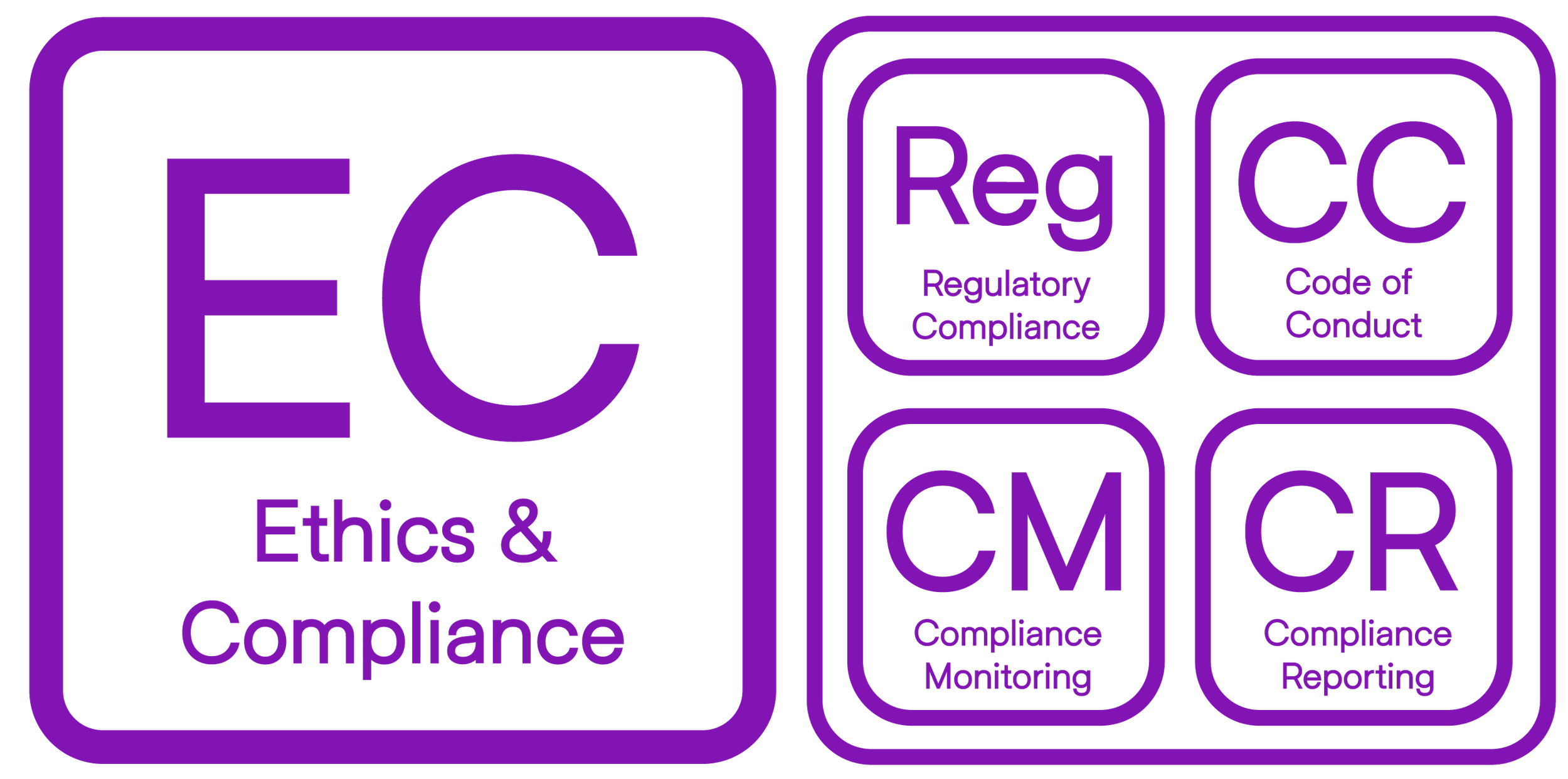
Ethics & compliance establishes standards of conduct and ensures adherence to laws and regulations.
Regulatory compliance: meeting legal and regulatory requirements
Code of conduct: defining expected behaviours and standards
Compliance monitoring: assessing adherence across the organisation
Compliance reporting: communicating compliance status and issues
Environment, Social, and Governance (ESG)
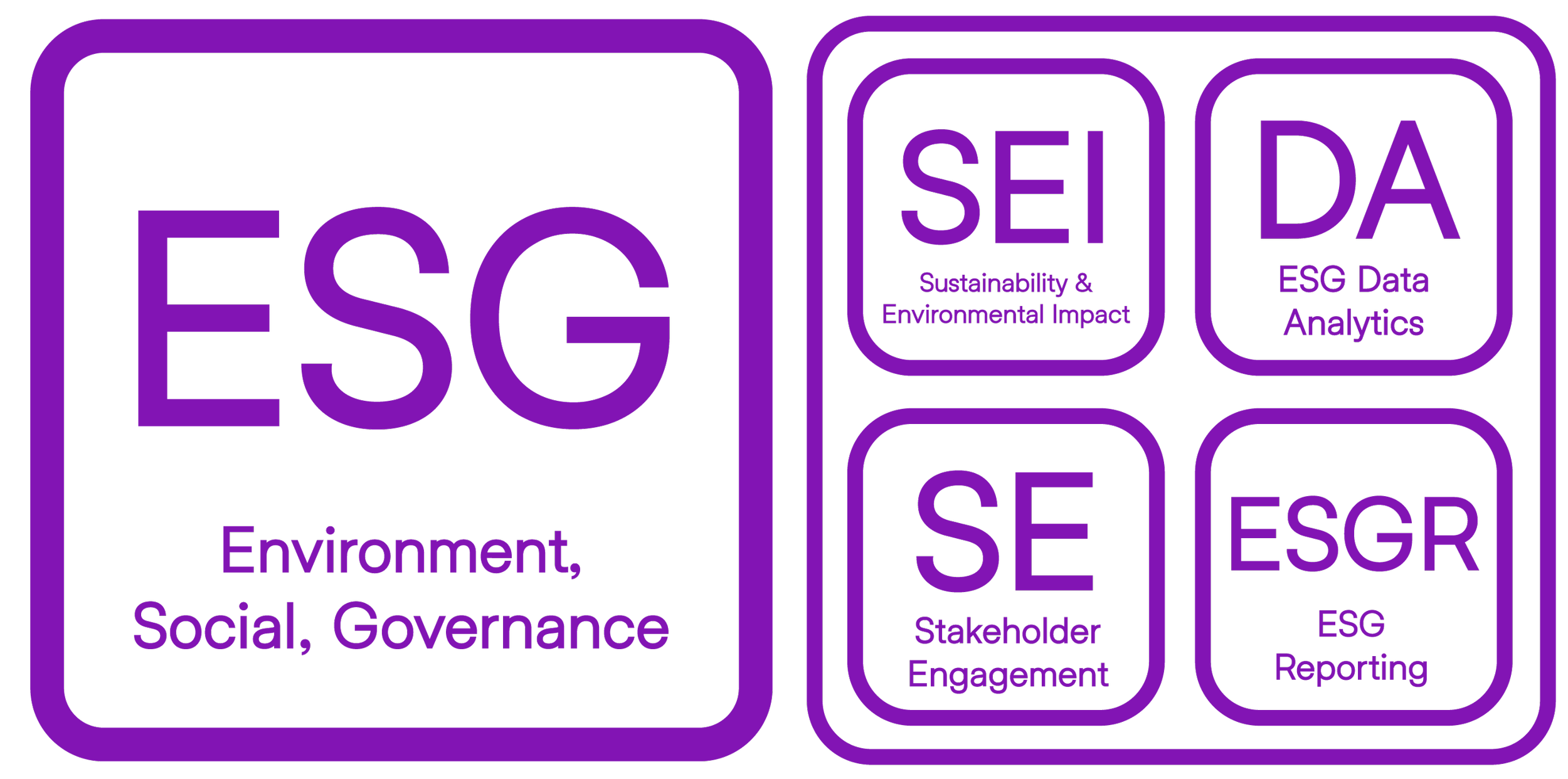
ESG addresses the organisation’s impact on stakeholders, society and the environment.
Sustainability & environmental impact: managing environmental footprint and resource use
ESG data & analytics: measuring and analysing ESG performance
Stakeholder engagement: engaging with investors, customers and wider stakeholders
ESG reporting: disclosing ESG performance and commitments
Internal Audit
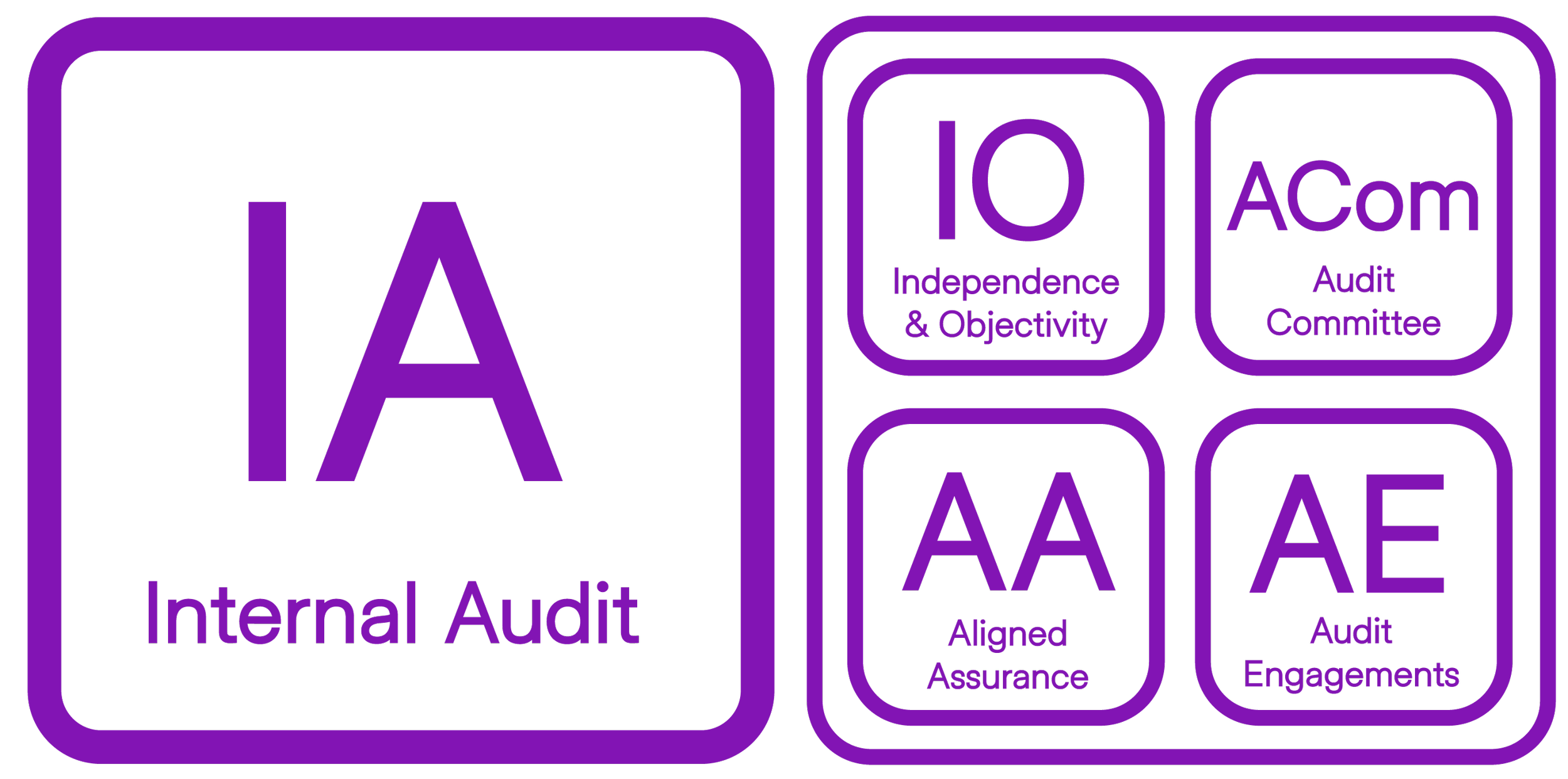
Internal audit provides independent assurance over governance, risk and control.
Independence & objectivity: maintaining impartiality and credibility
Audit committee: providing oversight and governance of the function
Aligned assurance: coordinating assurance activities across the organisation
Audit engagements: assessing controls and identifying improvement areas
Financing
Financing aligns ambition with the capital required to achieve it.
Capital sources: securing funding from investors, lenders and markets
Ownership & structure: balancing control, dilution and financial structure
Capital allocation: deploying funds to support strategy and growth
Investor expectations: meeting requirements for performance, discipline and control
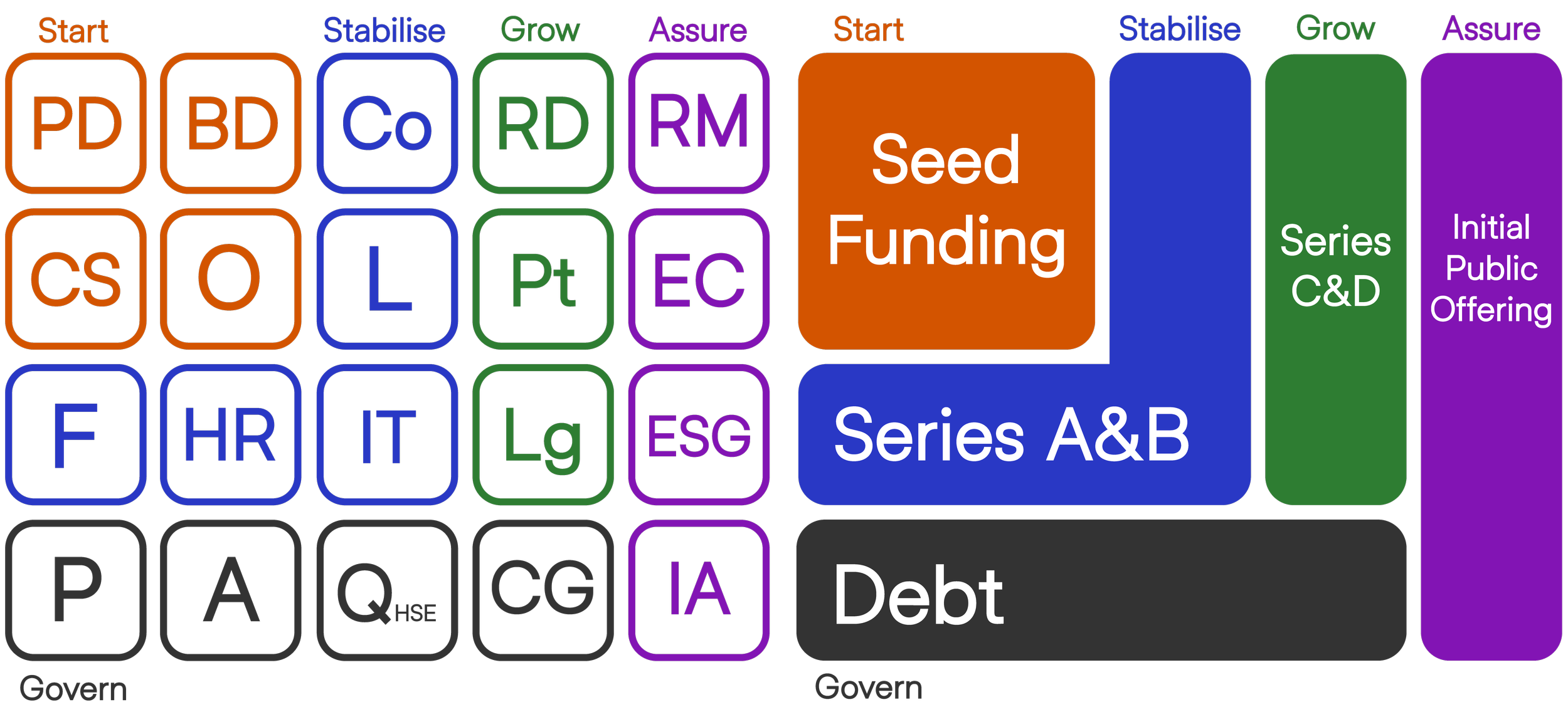
Financing evolves as the organisation progresses through each stage of the model.
Start: seed funding: supporting early development and initial traction
Stabilise: Series A&B: building structure, teams and operational capability
Grow: Series C&D: scaling markets, products and reach
Govern: debt financing: structuring capital to support control and efficiency
Assure: IPO: entering public markets with full transparency and accountability
Start: Seed Funding
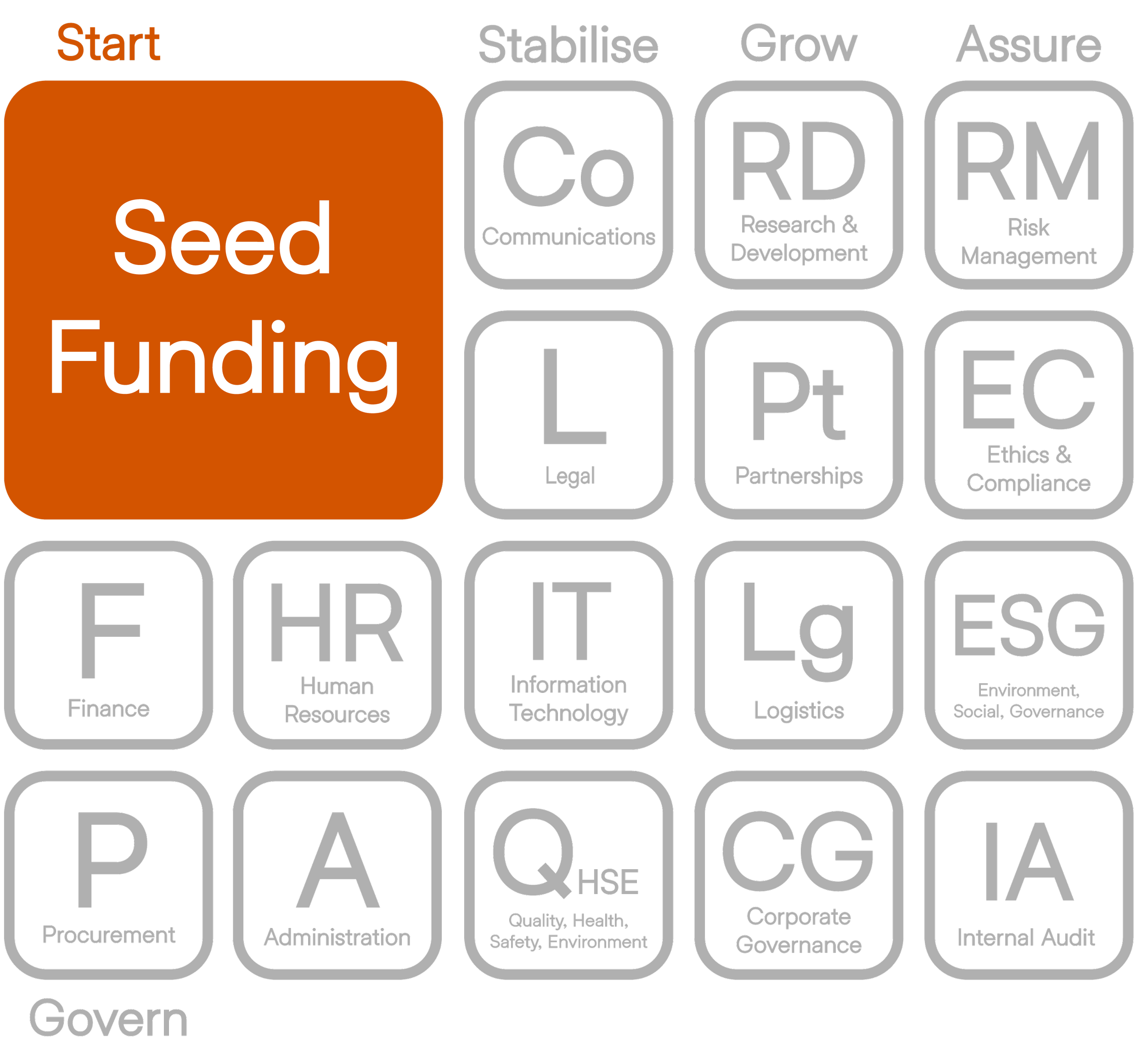
Seed funding enables early development and initial validation.
Capital: supporting early-stage development and experimentation
Validation: testing the viability of the idea
Uncertainty: operating with limited information and high risk
Progress: establishing early traction and direction
Stabilise: Series A&B
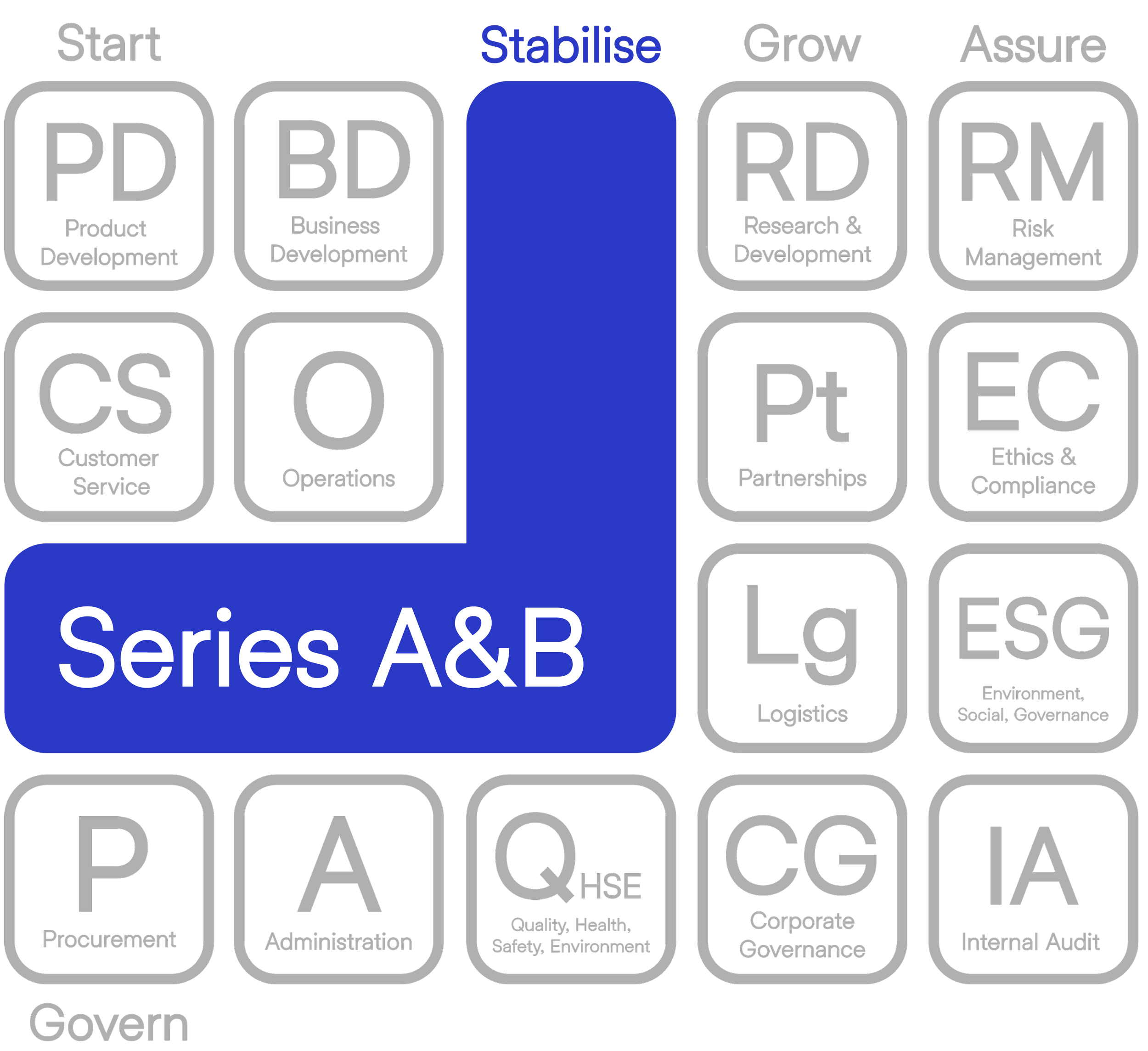
Series A&B establish structure, discipline and repeatability.
Evidence: demonstrating product-market fit and customer traction
Structure: building teams, systems and operational foundations
Repeatability: delivering consistent performance across the business
Discipline: operating with control and scalable processes
Grow: Series C&D
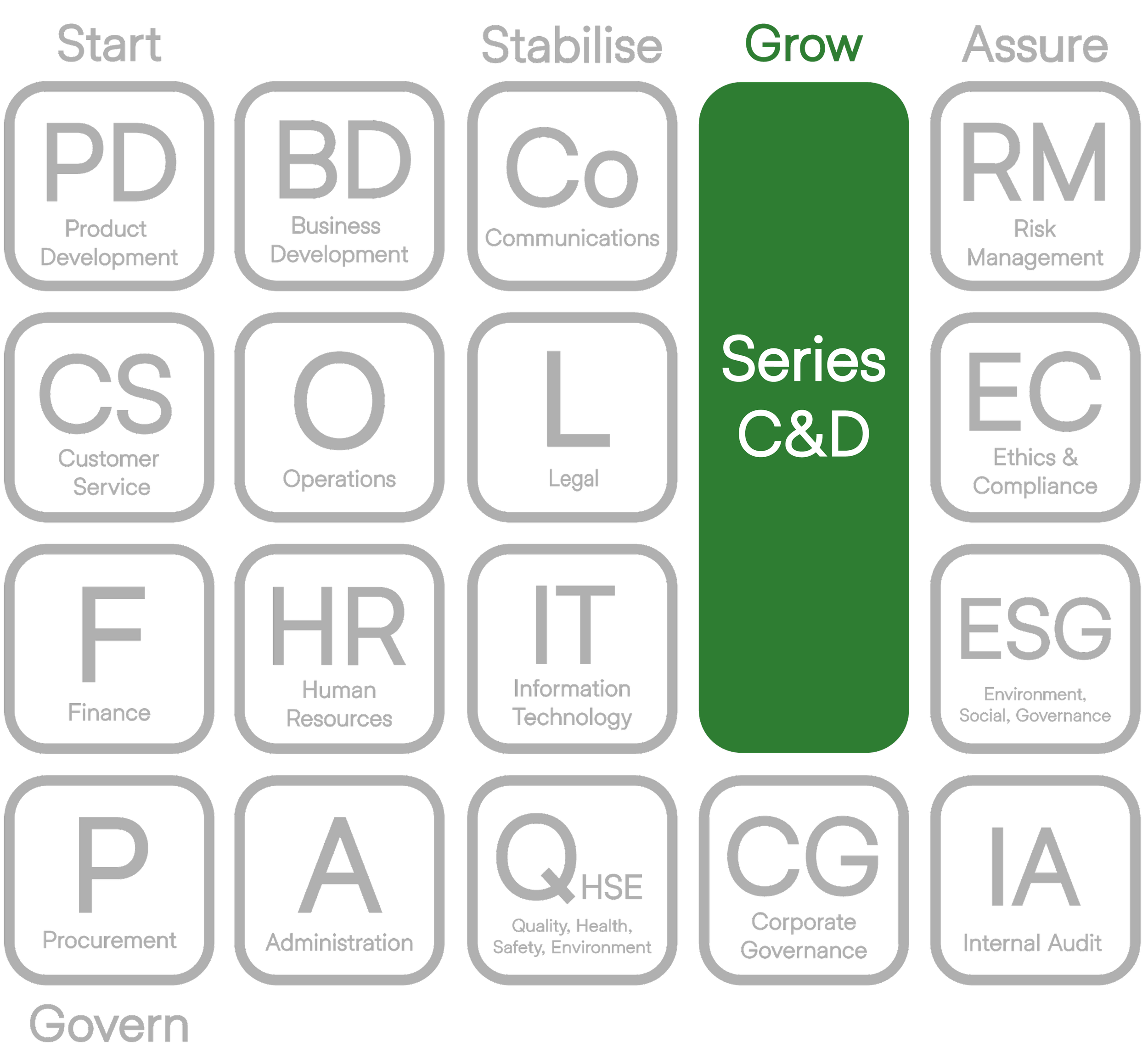
Series C&D enable scaled growth, expansion and strategic positioning.
Scale: expanding markets, products and geographic reach
Capability: strengthening leadership, systems and organisational depth
Momentum: sustaining growth with consistency and control
Readiness: preparing for strategic events such as acquisitions or IPO
Govern: Debt
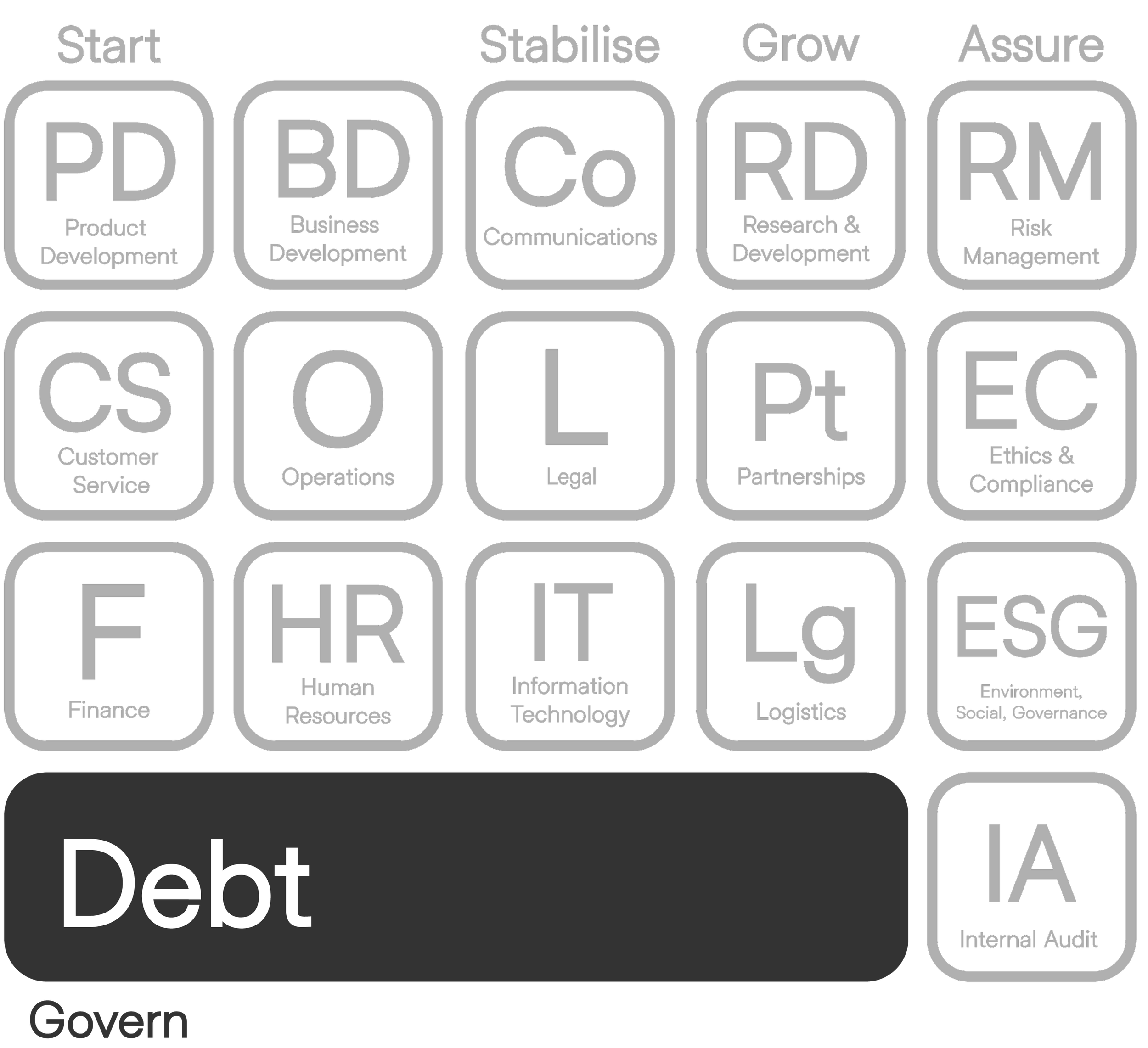
Debt financing introduces leverage as a structured tool for efficiency and control.
Leverage: using borrowed capital to support growth and investment
Structure: aligning debt with predictable performance and cash flow
Discipline: operating within defined financial obligations and constraints
Control: financing growth without diluting ownership
Assure: Initial Public Offering (IPO)

An IPO introduces the organisation to public markets under full transparency and scrutiny.
Capital: raising funds through public market participation
Transparency: meeting elevated standards of disclosure and reporting
Discipline: operating with consistency, control and market accountability
Governance: demonstrating maturity across leadership, culture and systems